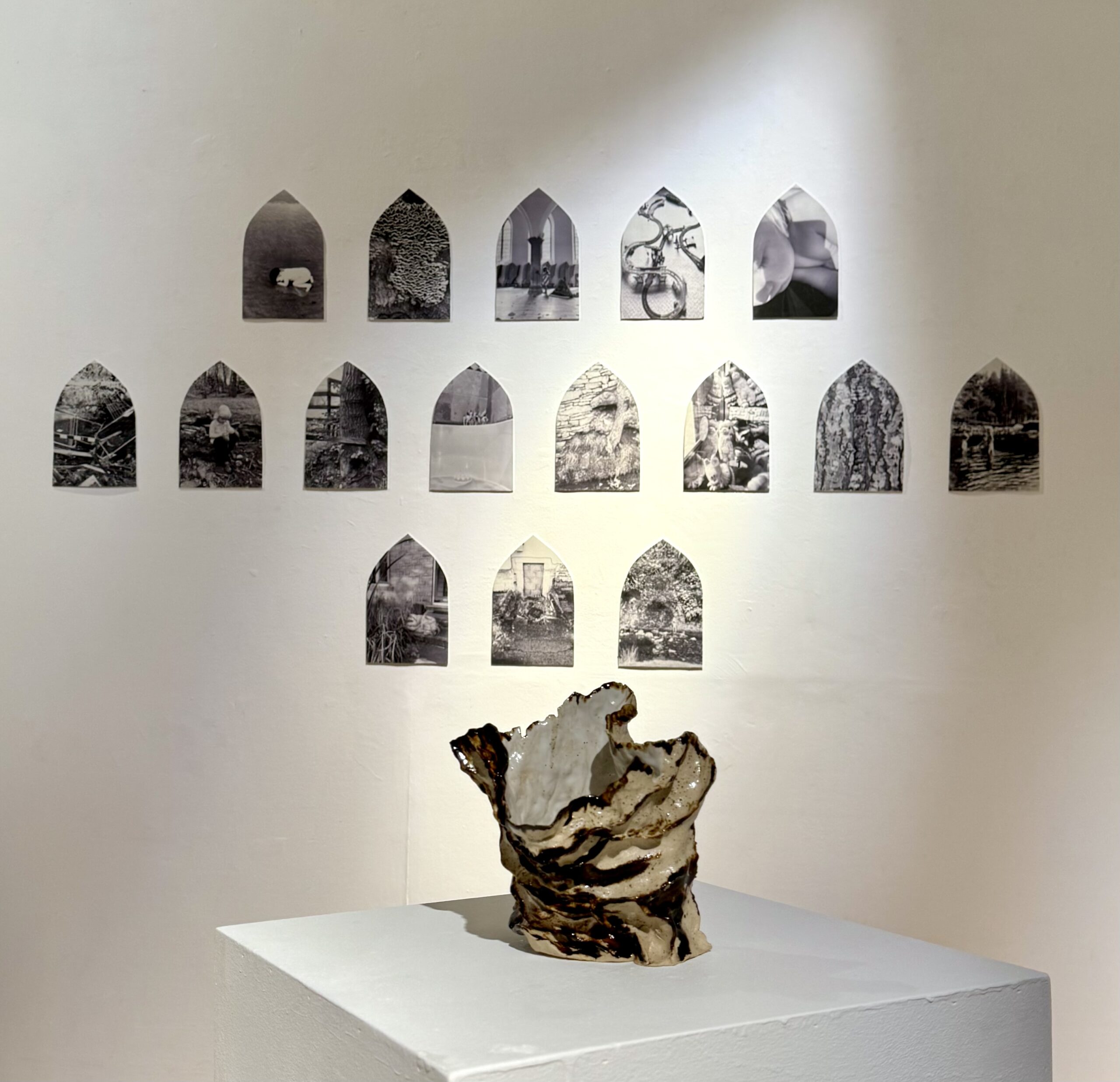
Our Wider Flesh is a video and exhibition which takes its name from an essay written by the cultural ecologist David Abram, who describes the journeys of migratory animals such as the Monarch Butterfly and Sockeye Salmon using the sensory exchange that guides them across the surface of the Earth to reproduce. These animals navigate thousands of miles over land, through oceans and along rivers to exact locations with no internal map or representational image projected outwards onto the world. Instead, it is performed through the sensations of the landscape experienced through their bodies. As Abram suggests, the landscape becomes part of their ‘wider flesh.’
This work charts the first year of my practice-based PhD project ‘Mothering Beyond the Flesh’, which investigates the relationship between landscape, maternal agency and creative practice. Situated in the post-industrial and semi-rural landscape of West Yorkshire – where I was born, raised and currently live with my two young children – the first year of this research focussed on uncovering the historical and theoretical roots of my own separation from this landscape, and how maternal and creative practice can generate narratives that might illuminate ways in which to attend and re-attach ourselves to the immediate environment.
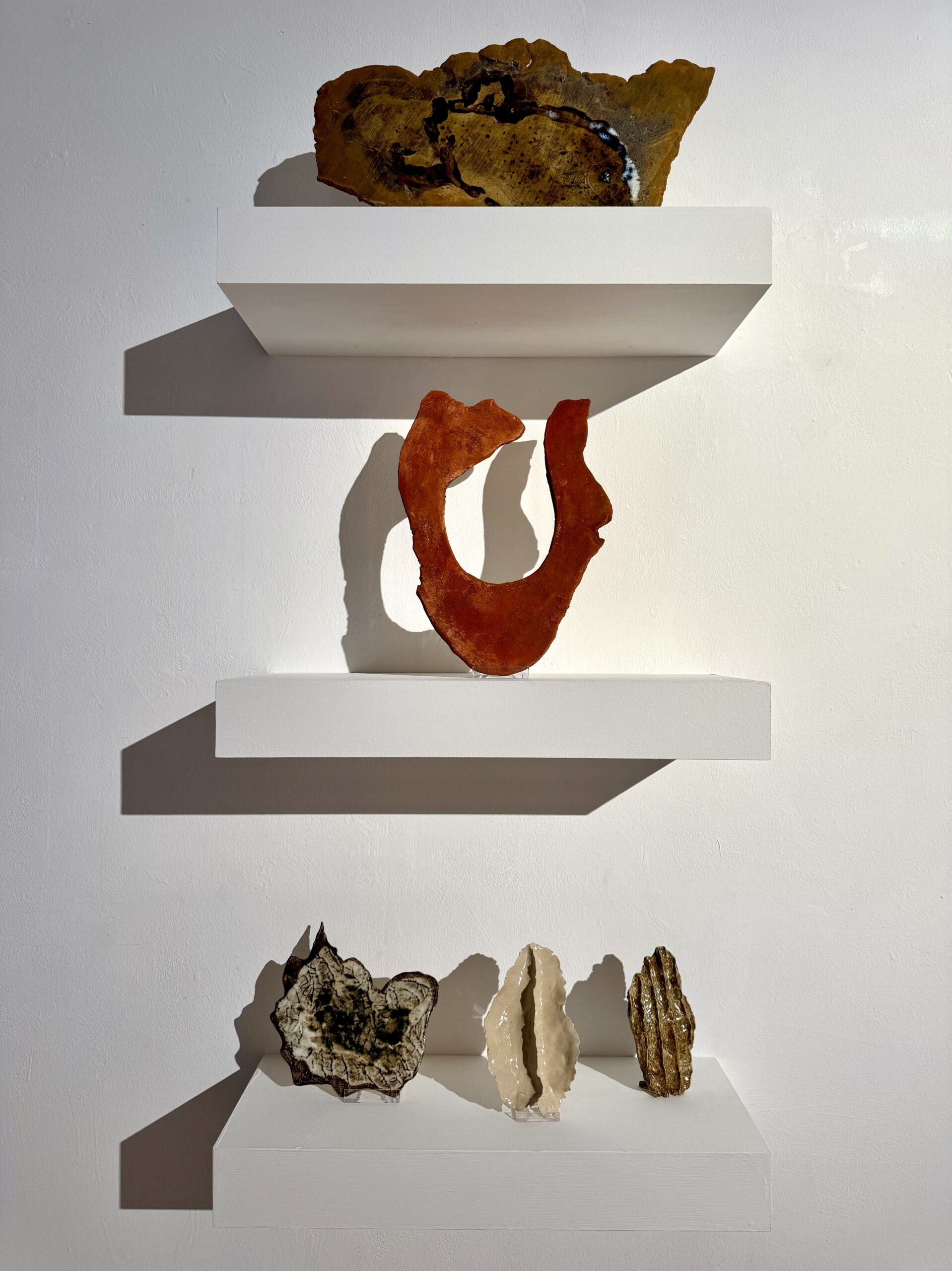
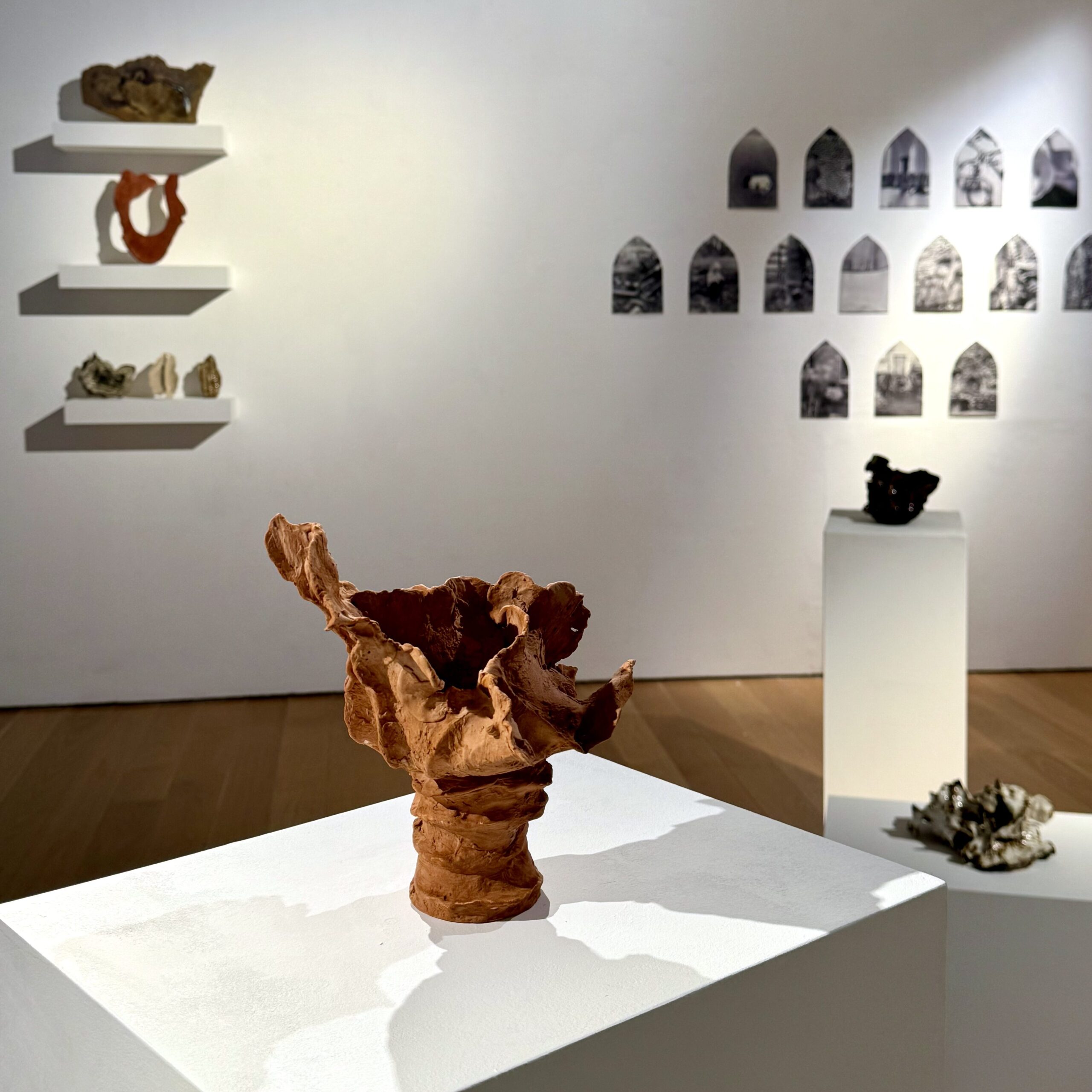
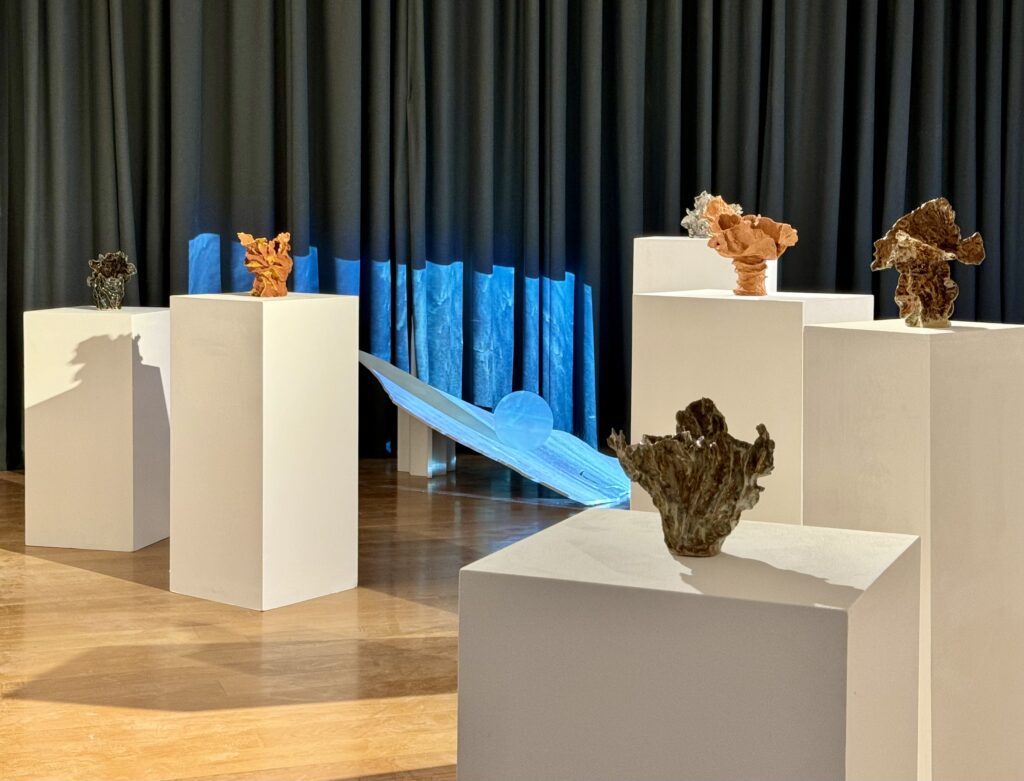
Engaging with maternal, phenomenological, ecofeminist and landscape theory, the exhibition is a meditation on placemaking, geological deep-time intimacy and the cyclical nature of dwelling and caregiving, becoming research artefacts that trace the convergence of these different practices.
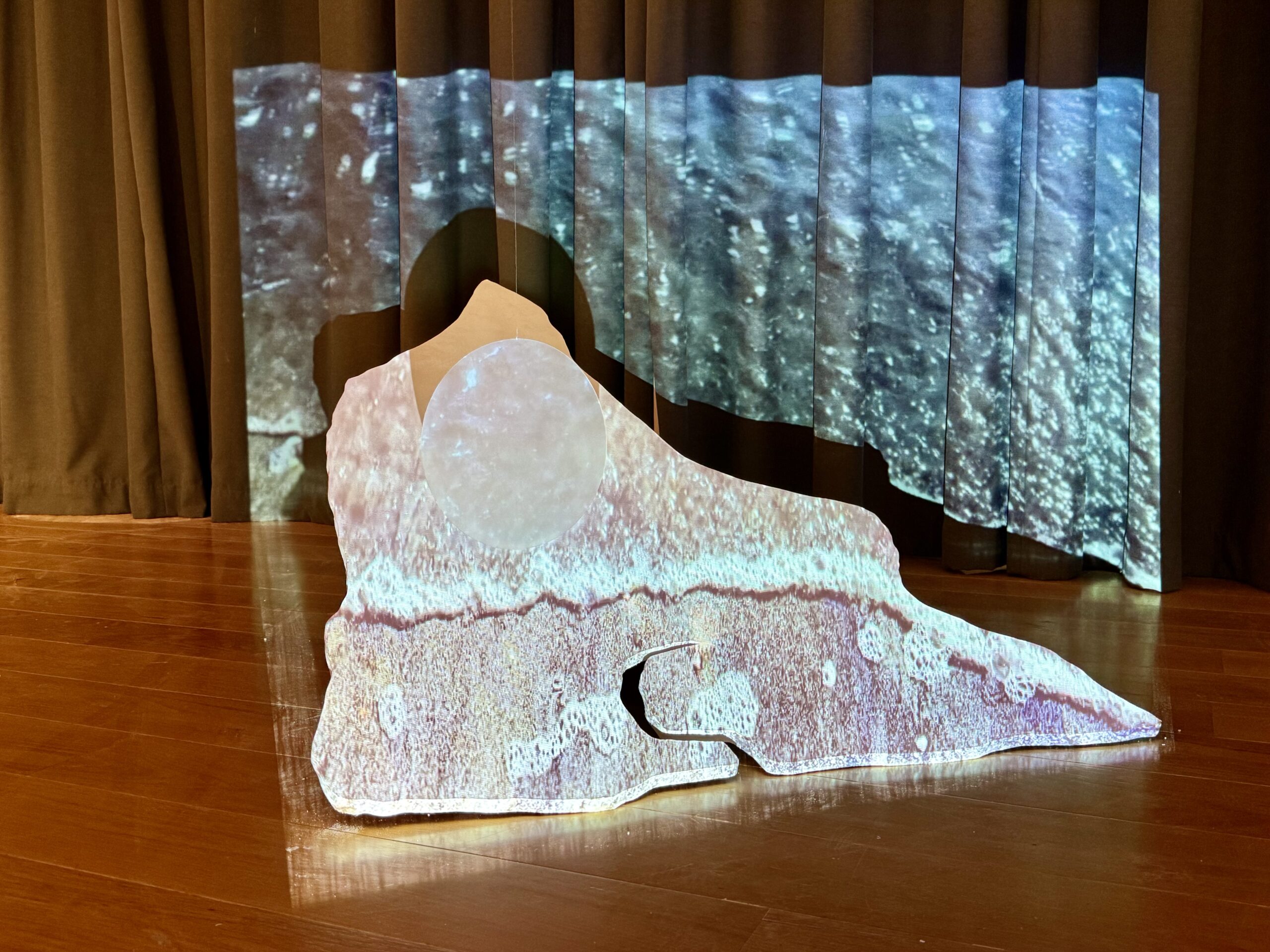
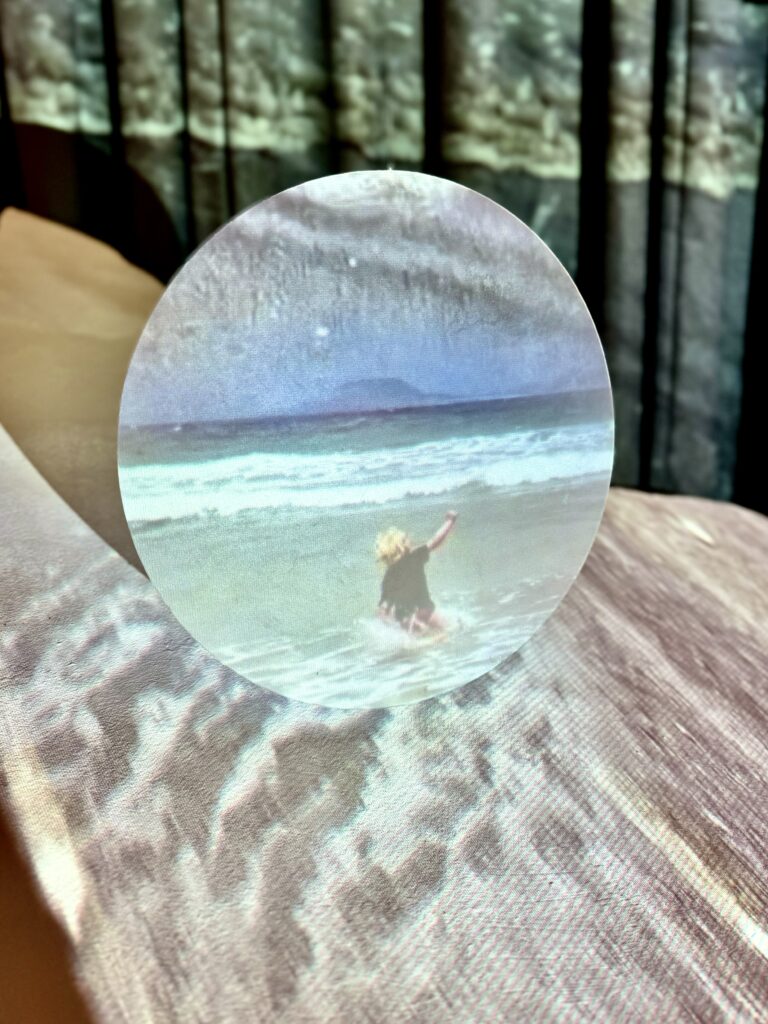
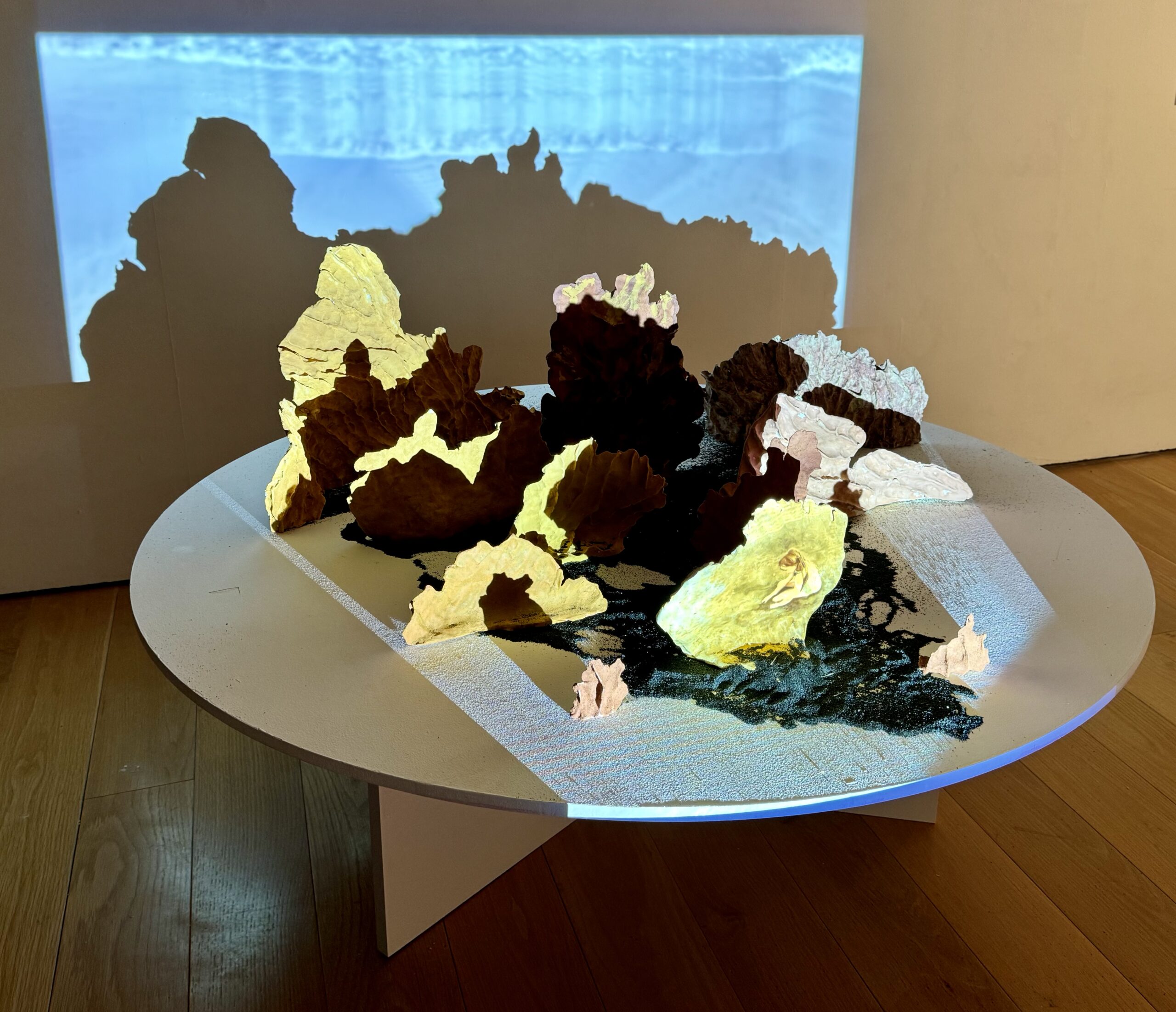
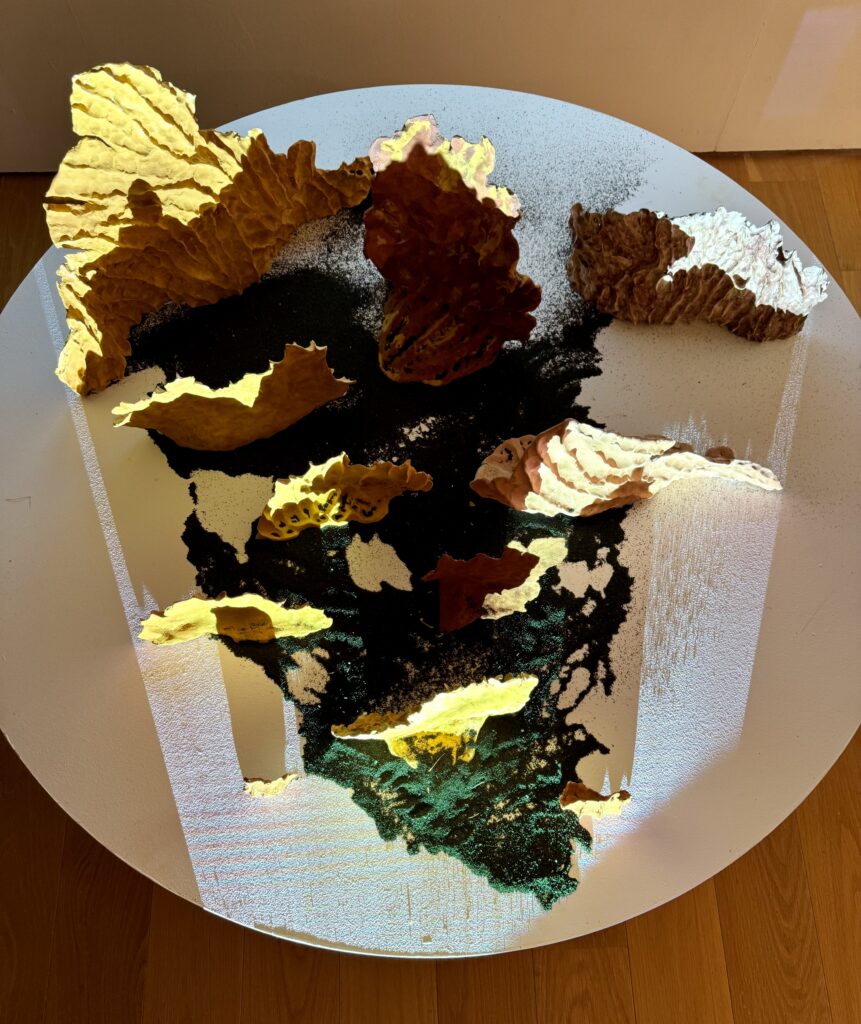
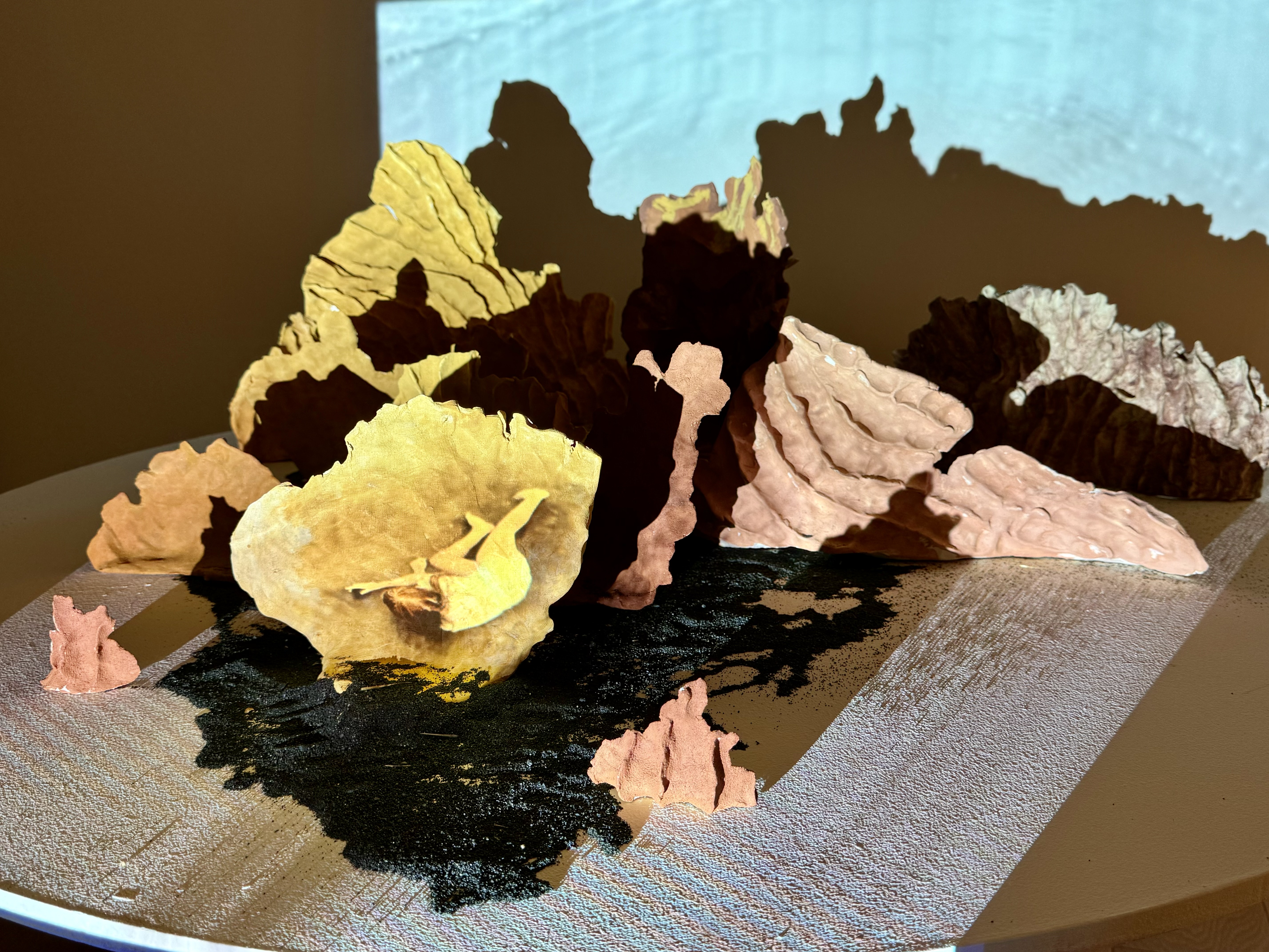
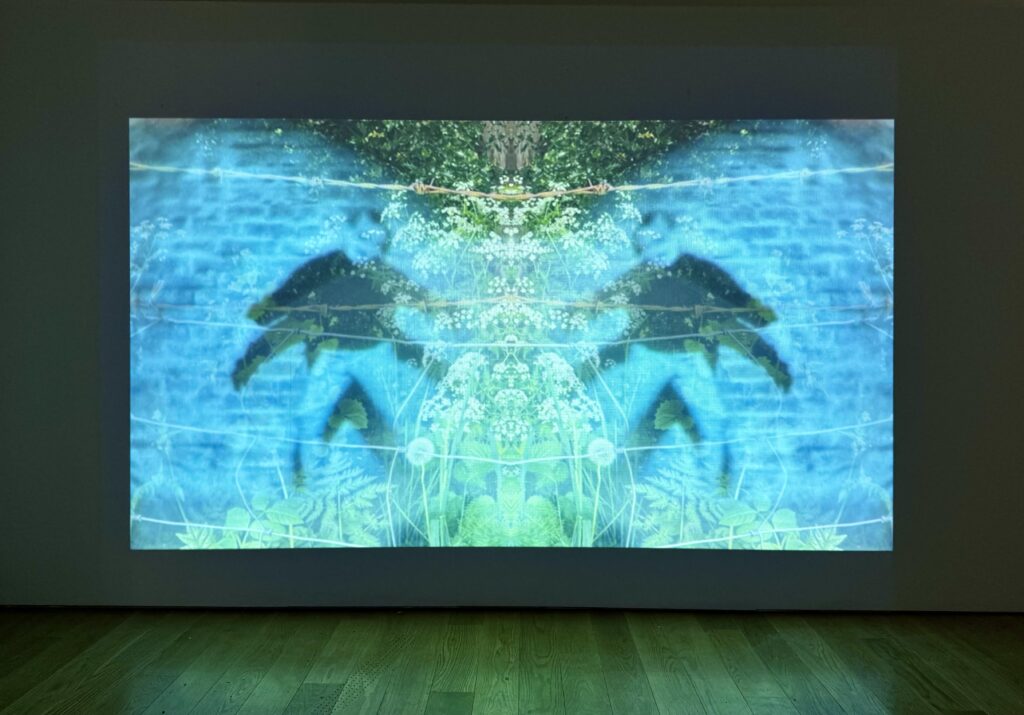
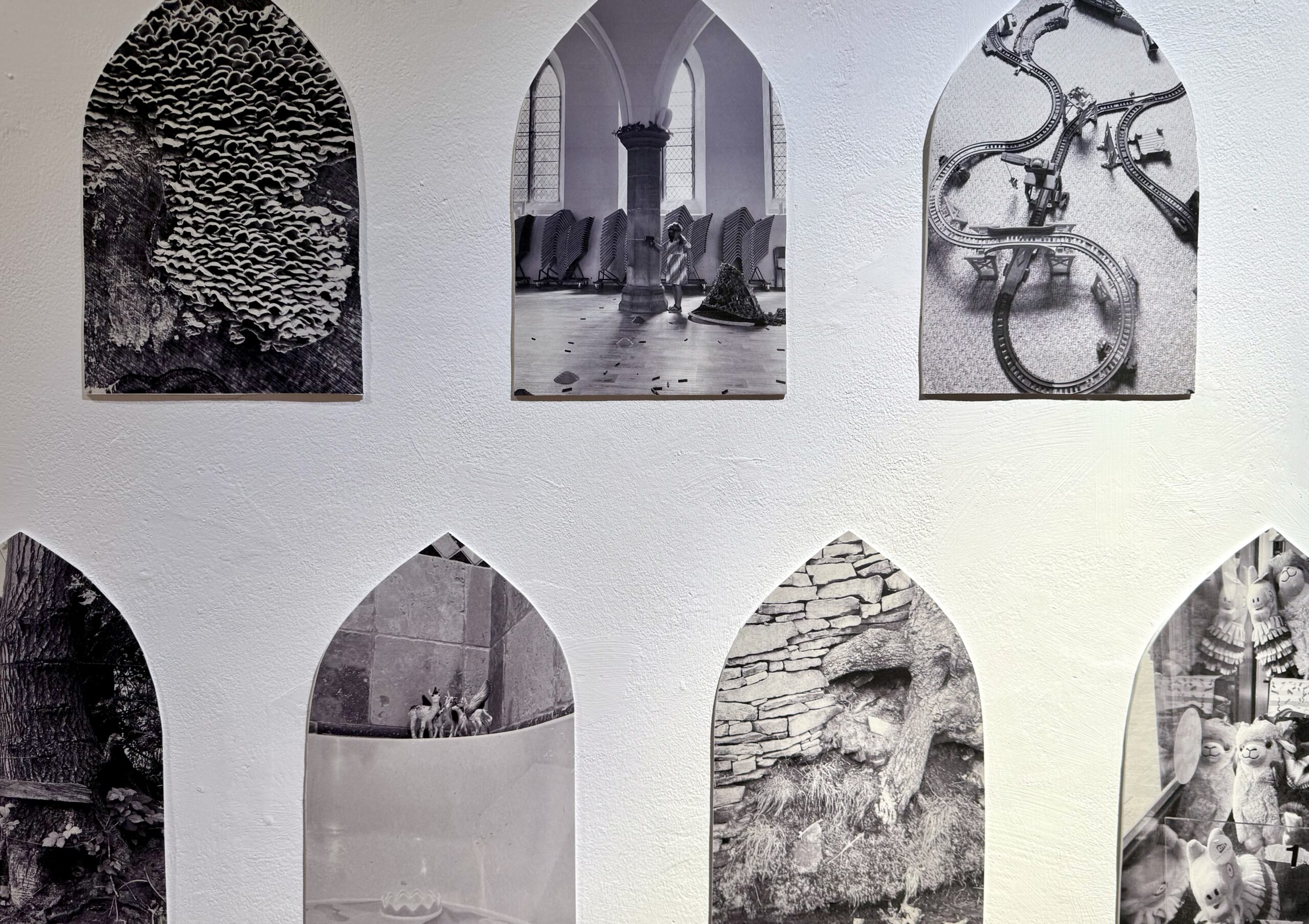
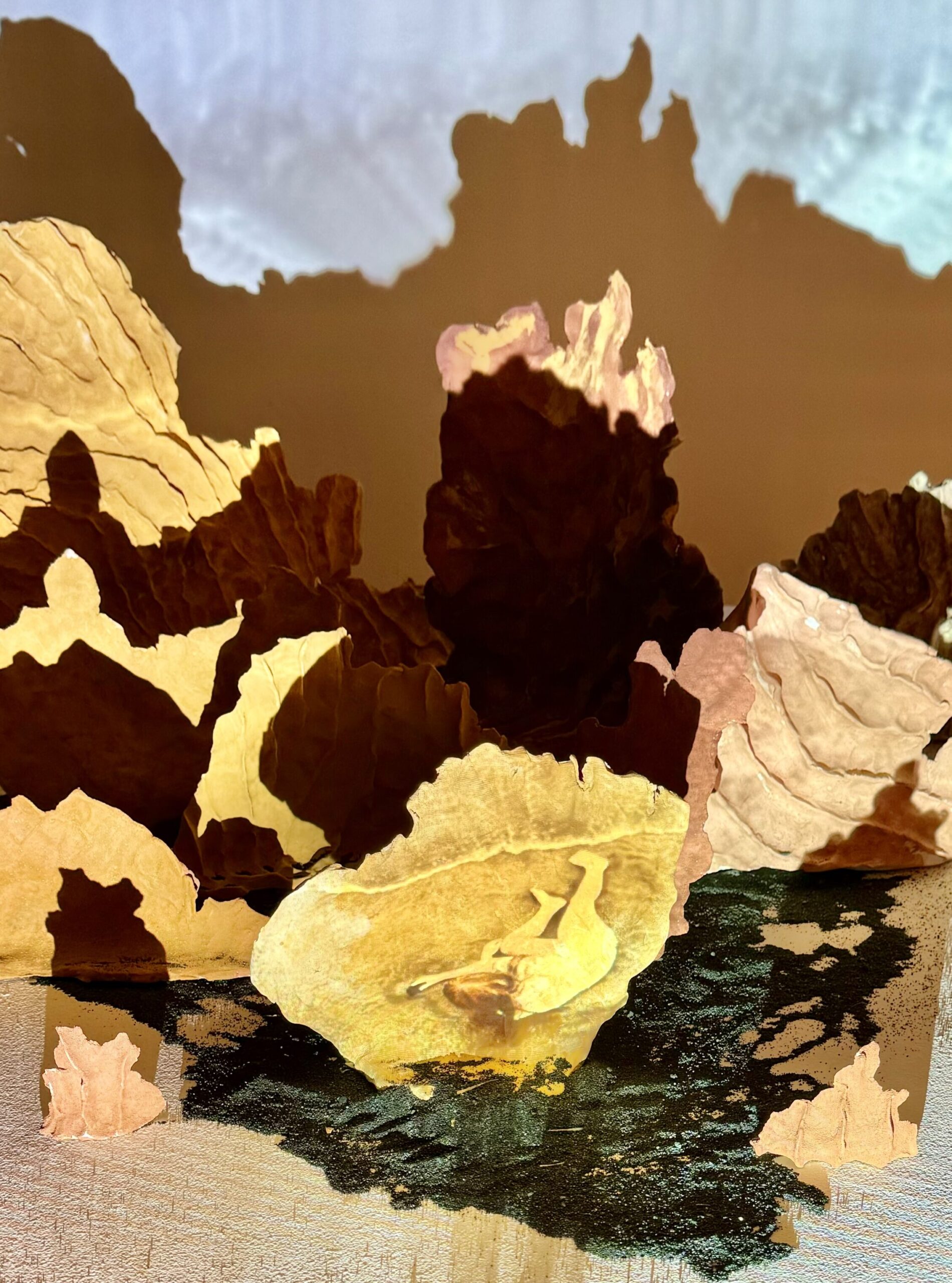
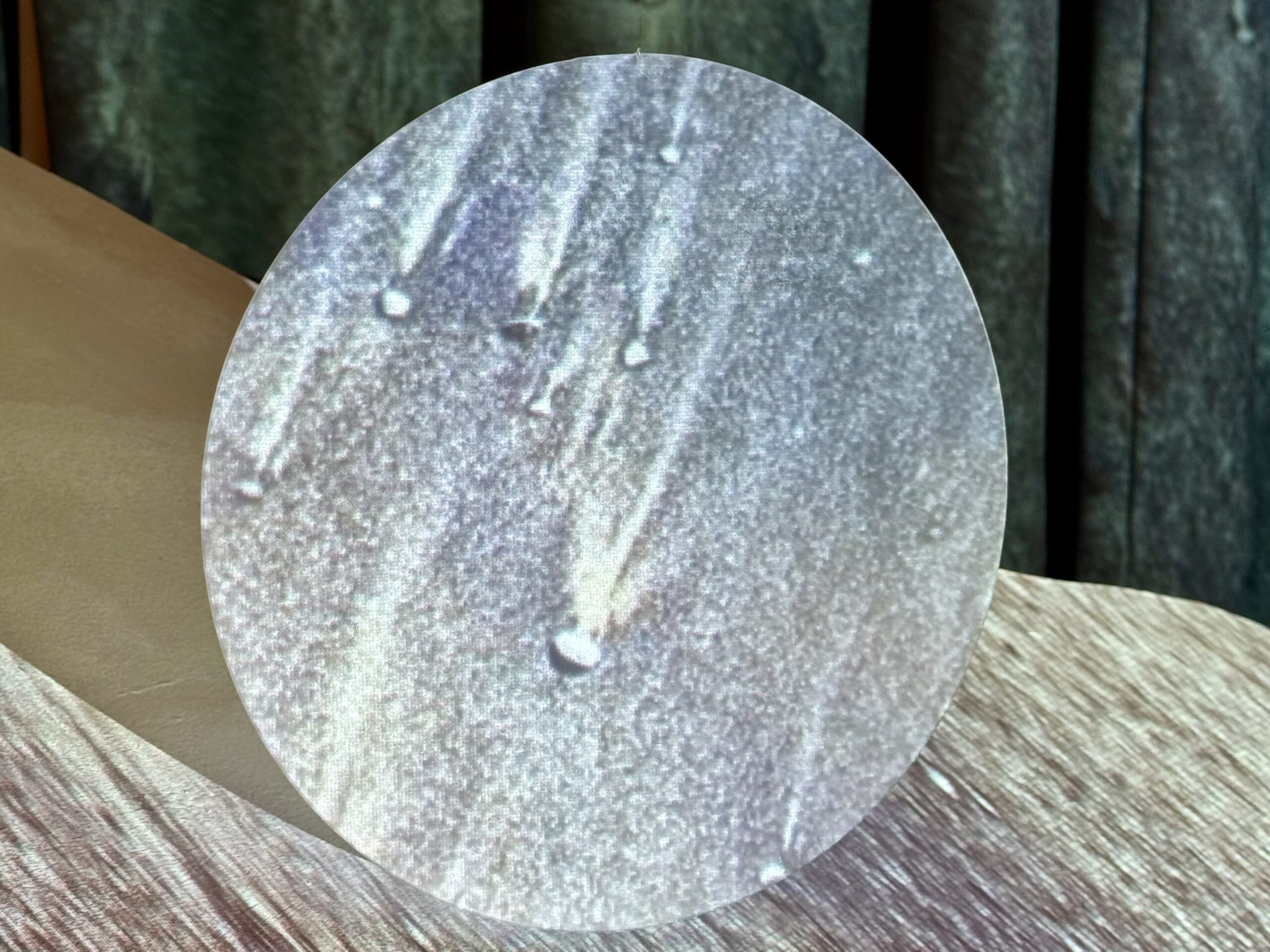
Through the lens of motherhood, the video ‘Our Wider Flesh’ (2024) articulates ideas about bodies and land, maternal ancestry and the enclosure acts preceding the Industrial Revolution which enabled capitalism in Europe to spread across the world. Set around a building site in a field across from my terraced house in the post-industrial village of Denby Dale, West Yorkshire, an a capella composition emerges from responding to the sounds of machinery as the landscape is carved up and turned into future homes. Footage of moving through this landscape is thrown onto paper using a faulty projector that is in the process of breaking down, metamorphosing and composting the imagery as it moves across the surface. My seven year old daughter is projected dancing around the arches of the Victorian viaduct next to their home, weaving her body into the spaces, mirroring and reifying the sensory exchange that might have existed before people were separated from their land by the centuries of capitalism. This separation can be witnessed and experienced as the dualisms of nature and culture manifest within the landscape and ecological crisis that is unfolding throughout the current epoch of time known as the Anthropocene.
out of my body she came
but my body was not my own
out of my mother’s body I came
but her body was not her own
our bodies are not our homes
they were taken centuries ago
like the landscape
enclosed
by hands that did not ask
all across Europe and beyond
a quiet grief filled the spaces
where our bodies and the land entwined
what was once
our wider flesh
the land was cut into fields
now this building site
turns the fields into stone
with future gardens
draped across the wounds
a place where I imagine a hidden ancestry
stories I’ll never be told
my girl born in the valley of coal and mud
my girl dancing in our terrace by the viaduct
her body encircles the spaces
and the landscape remembers
what was once
our wider flesh
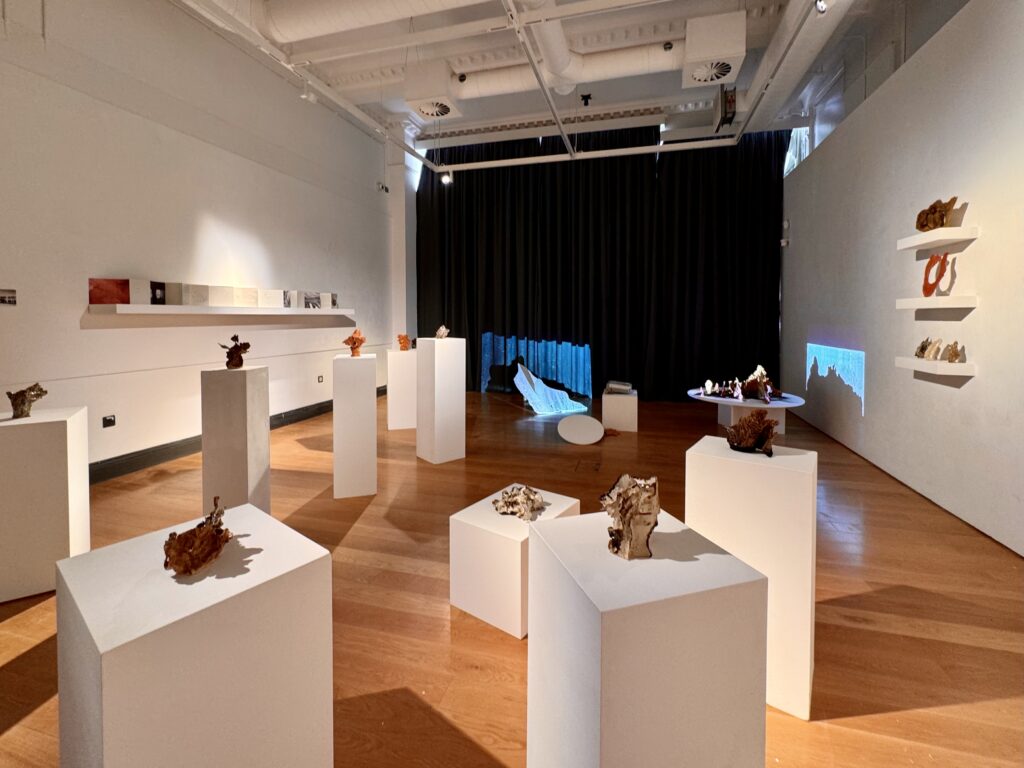
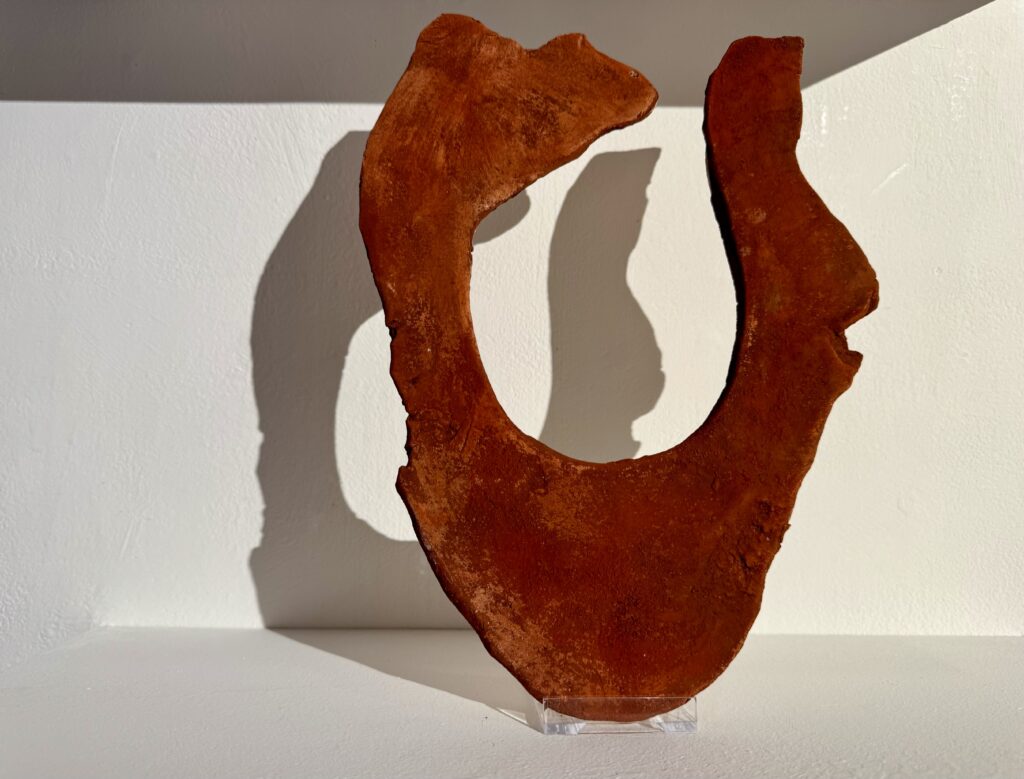
The following images include the exhibition ‘Our Wider Flesh’ held at the Project Space at FAHACS in July 2024.