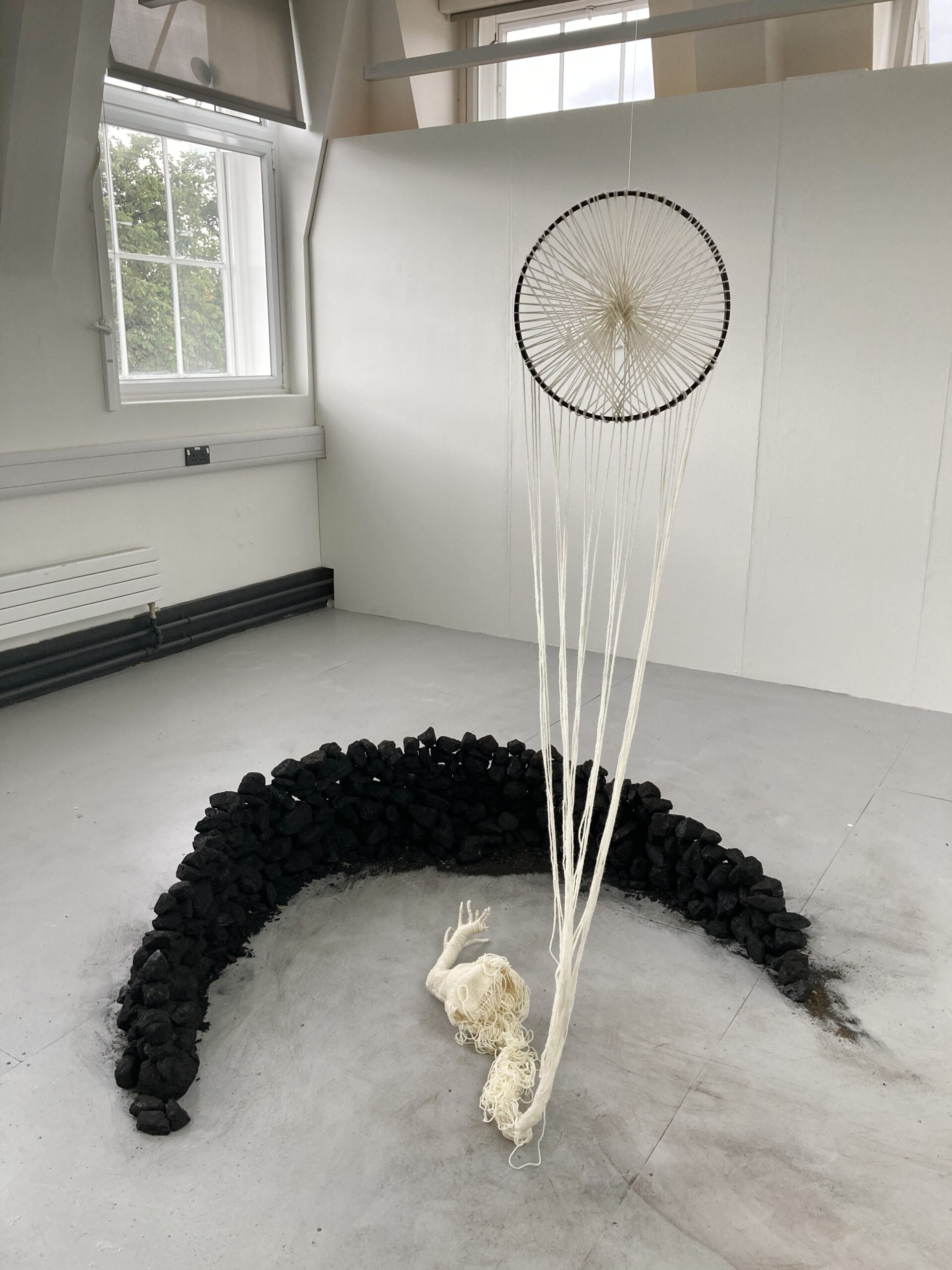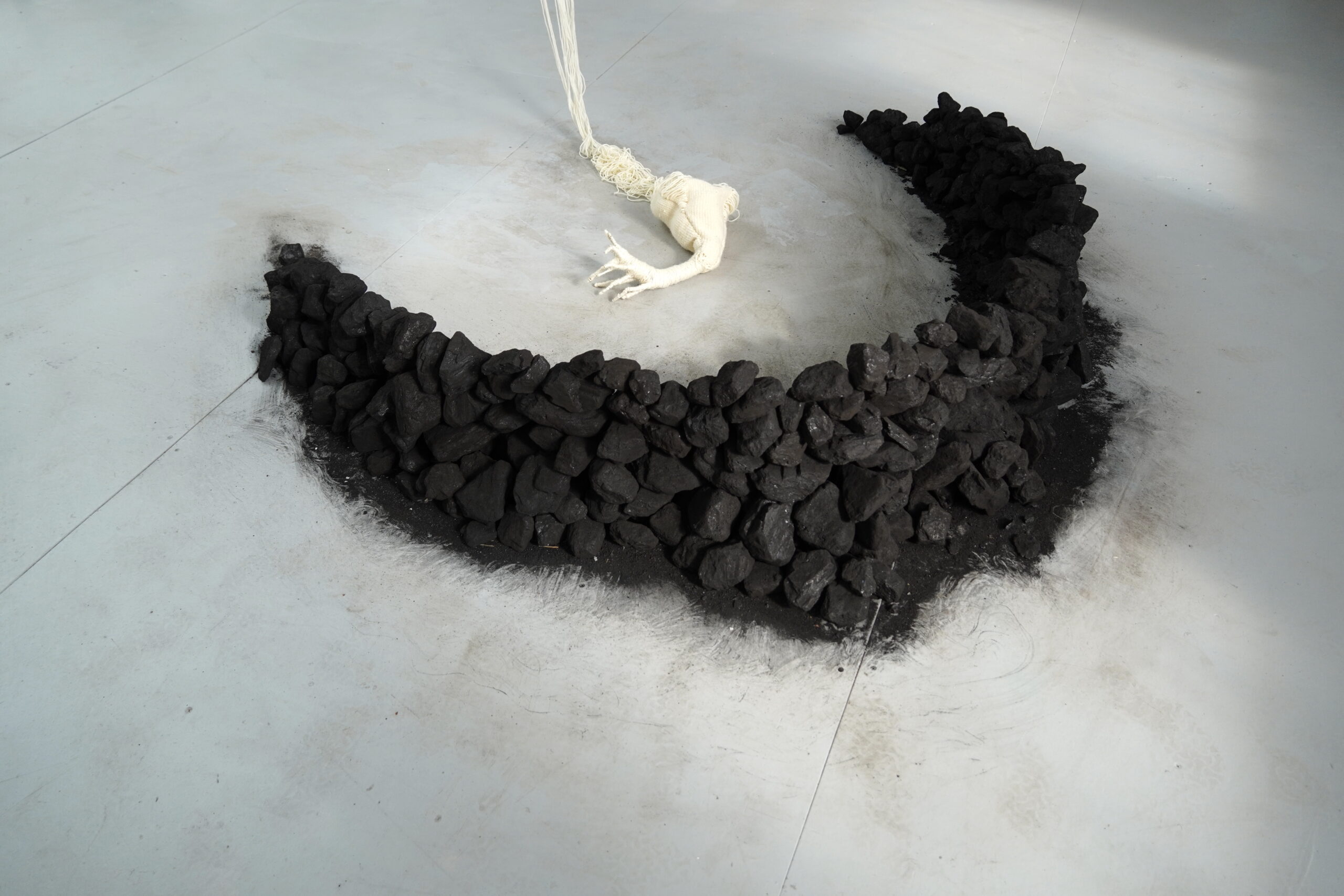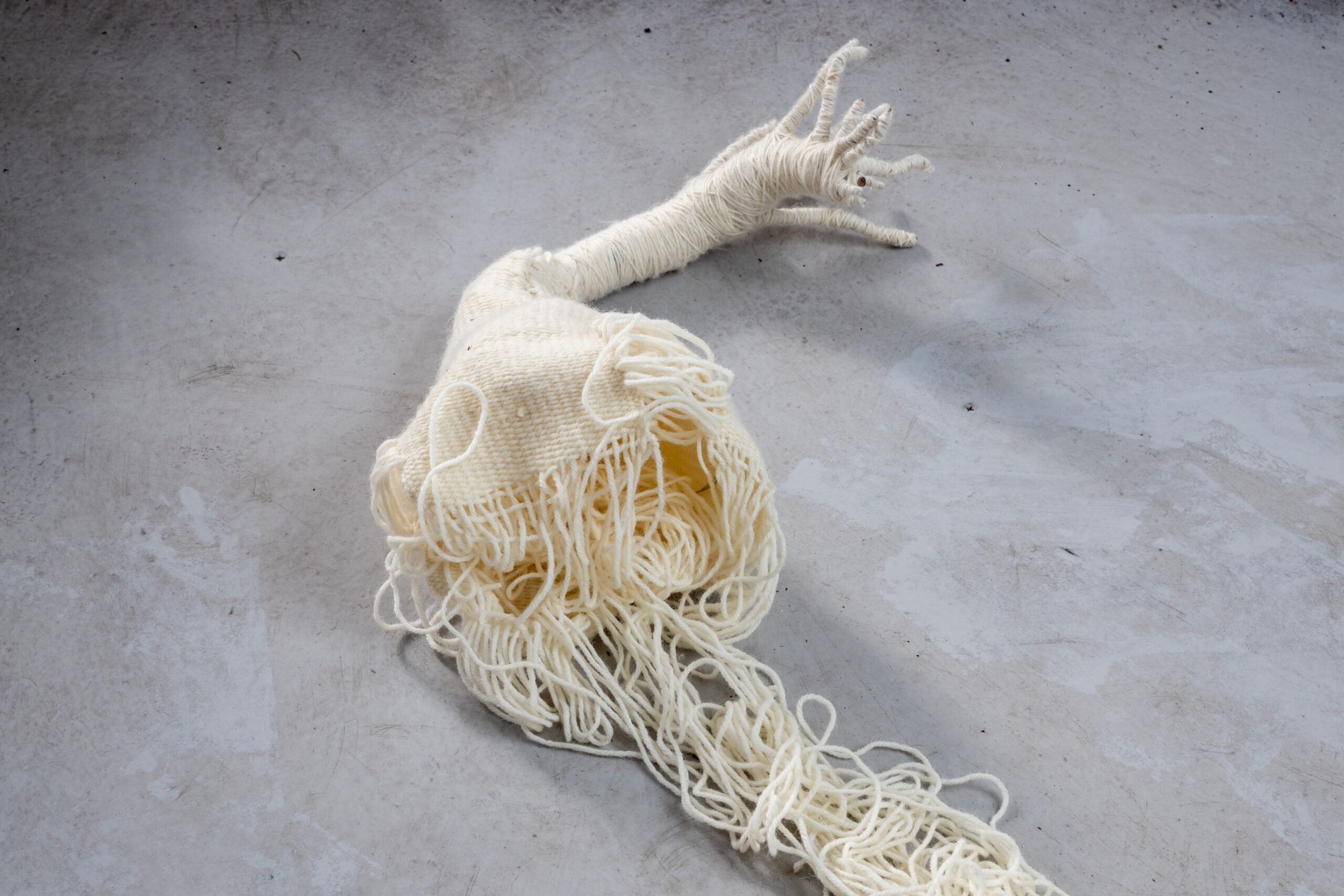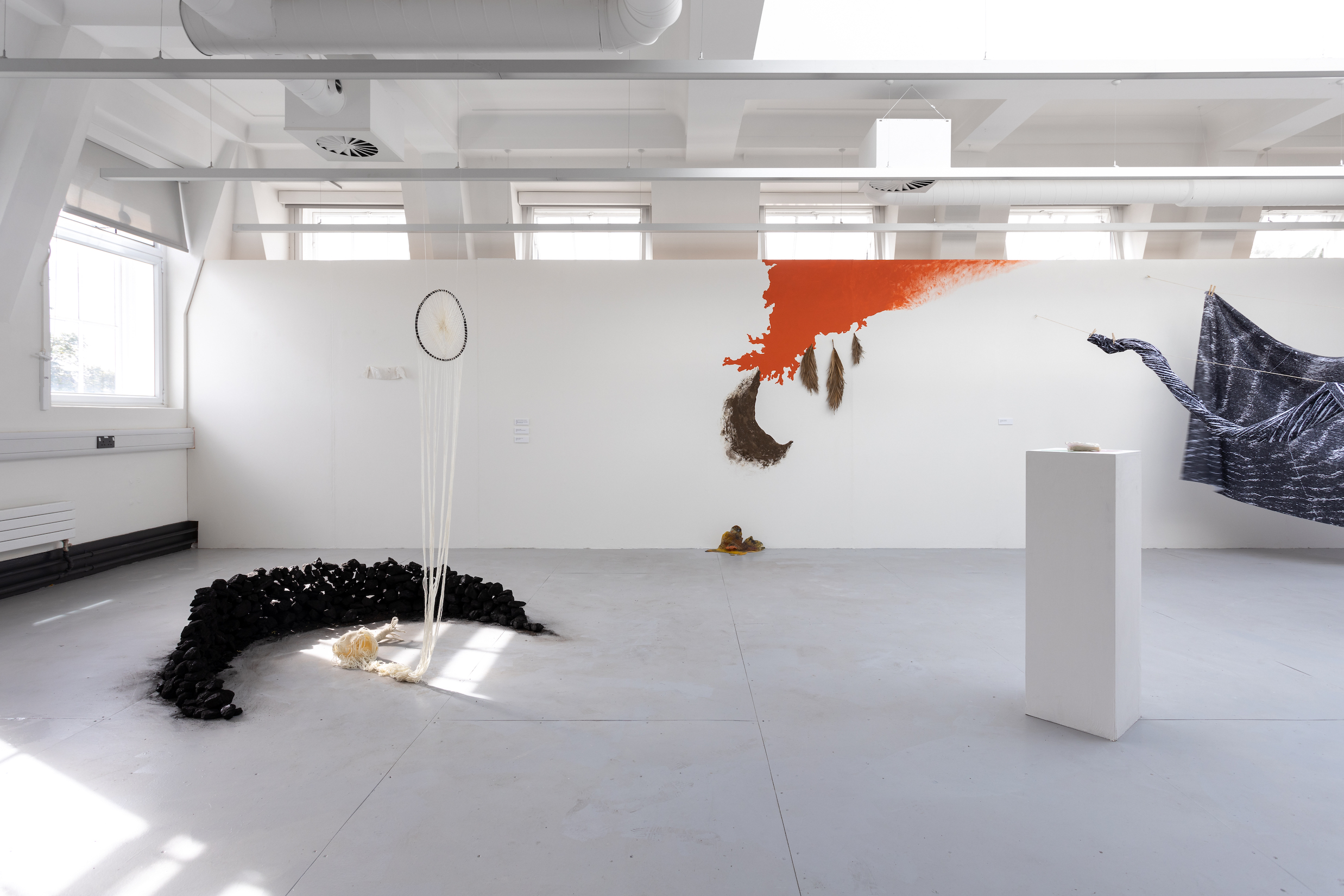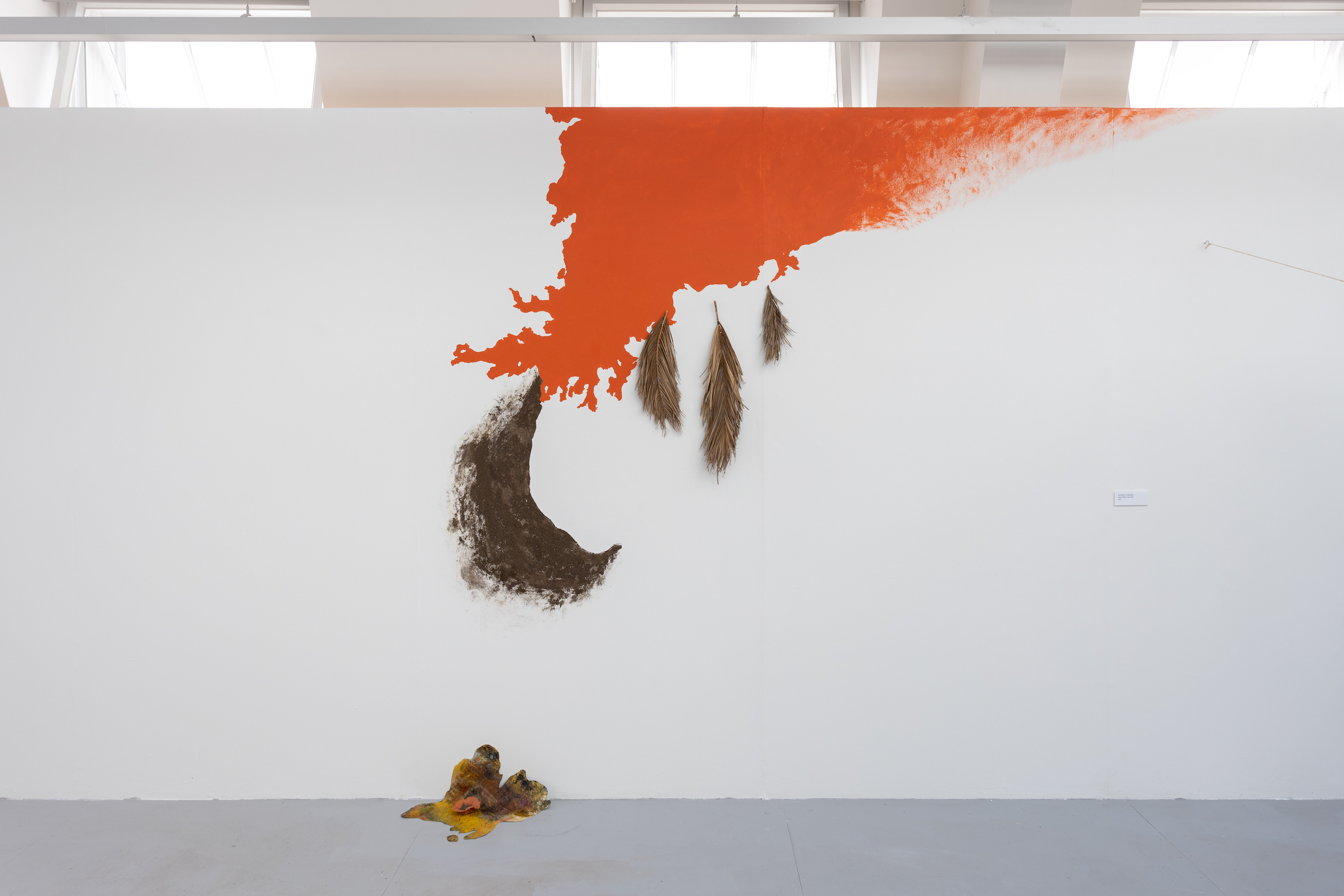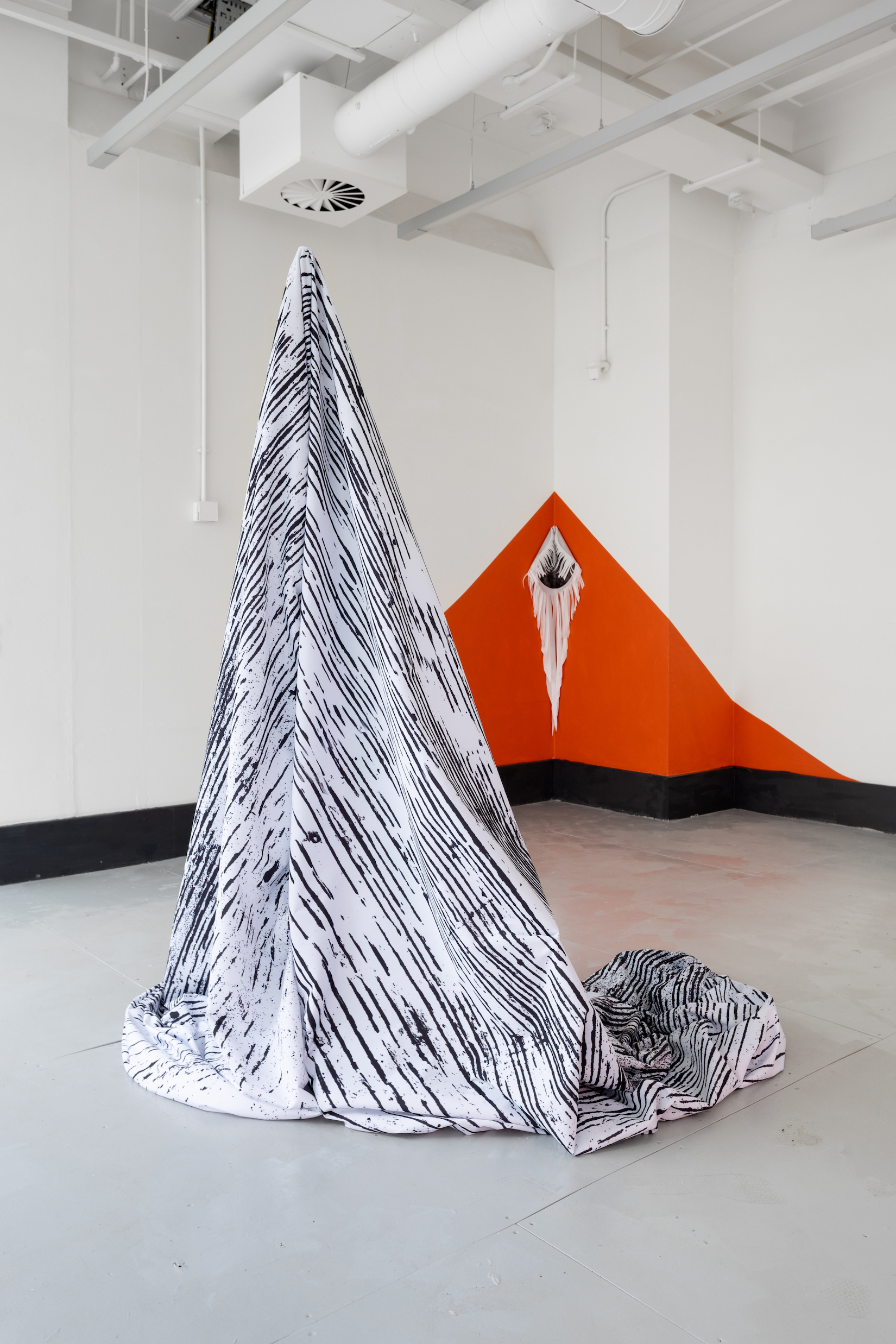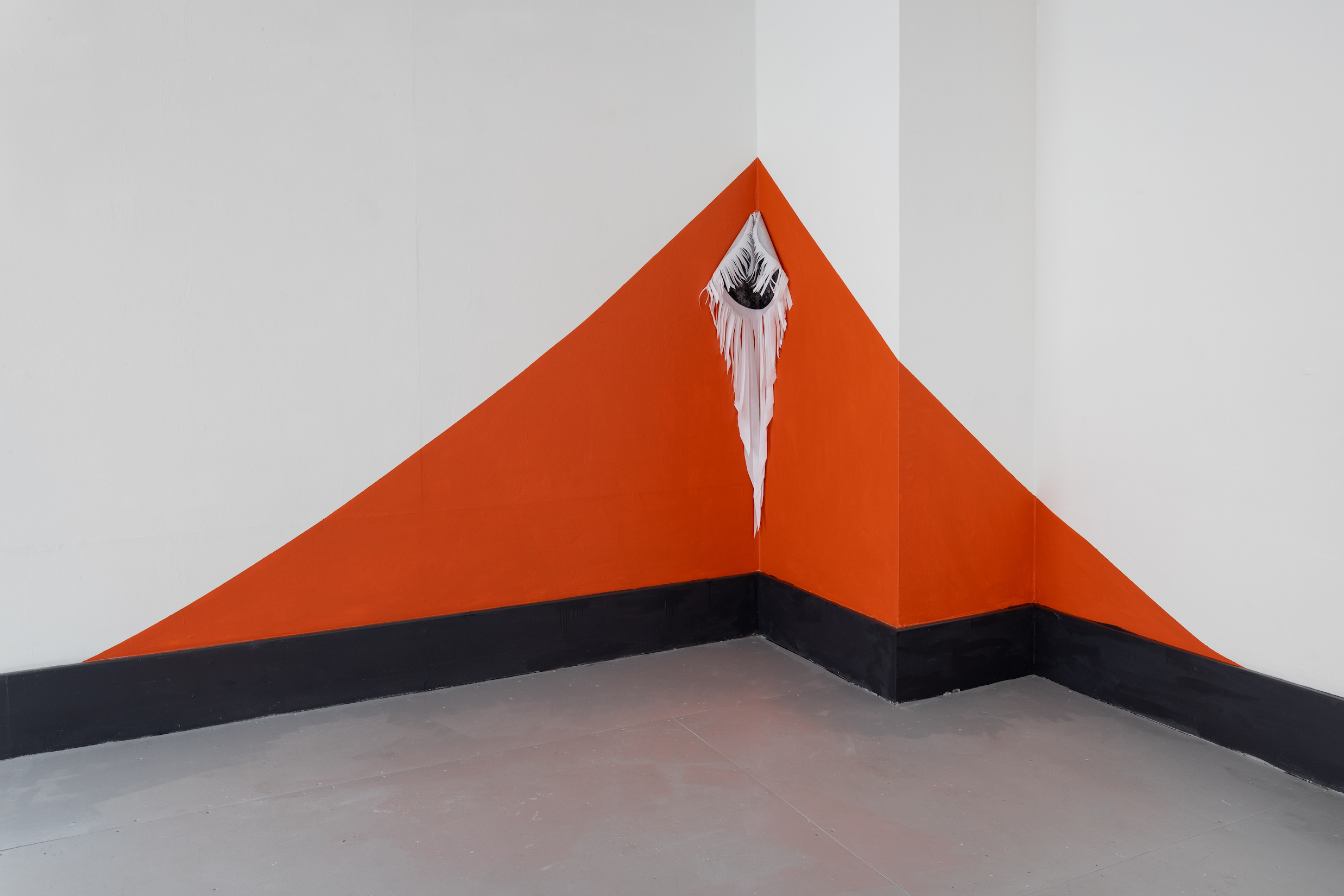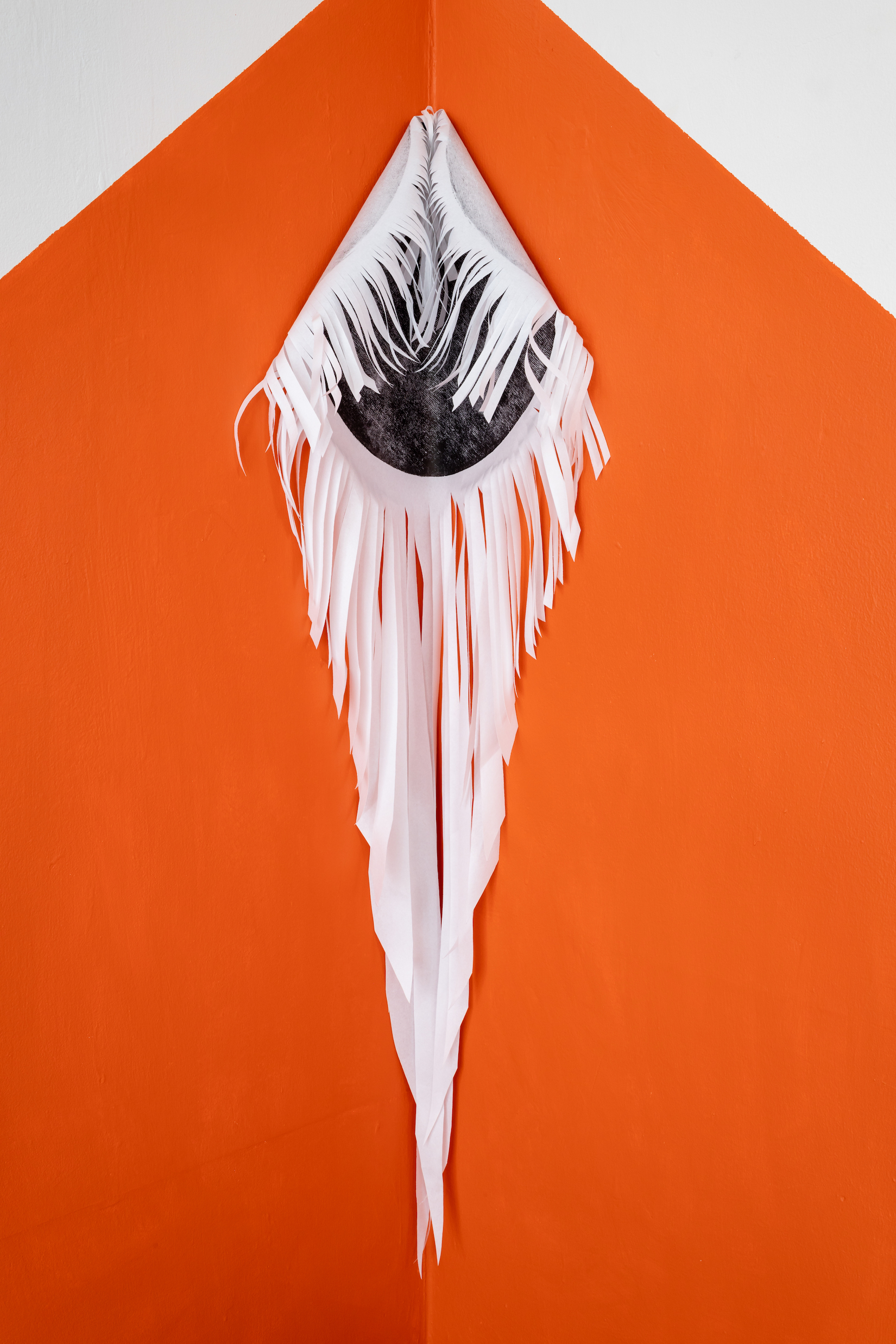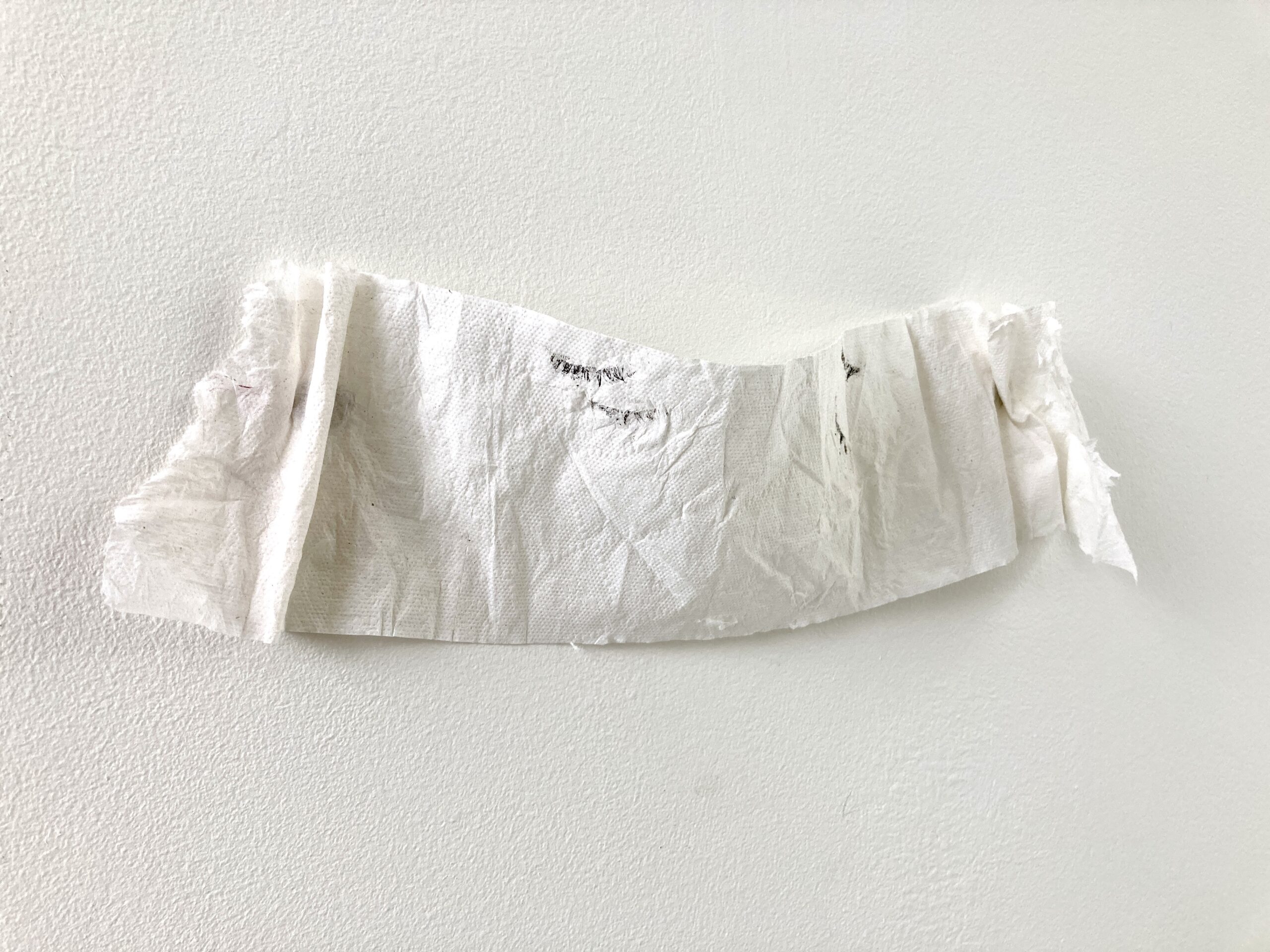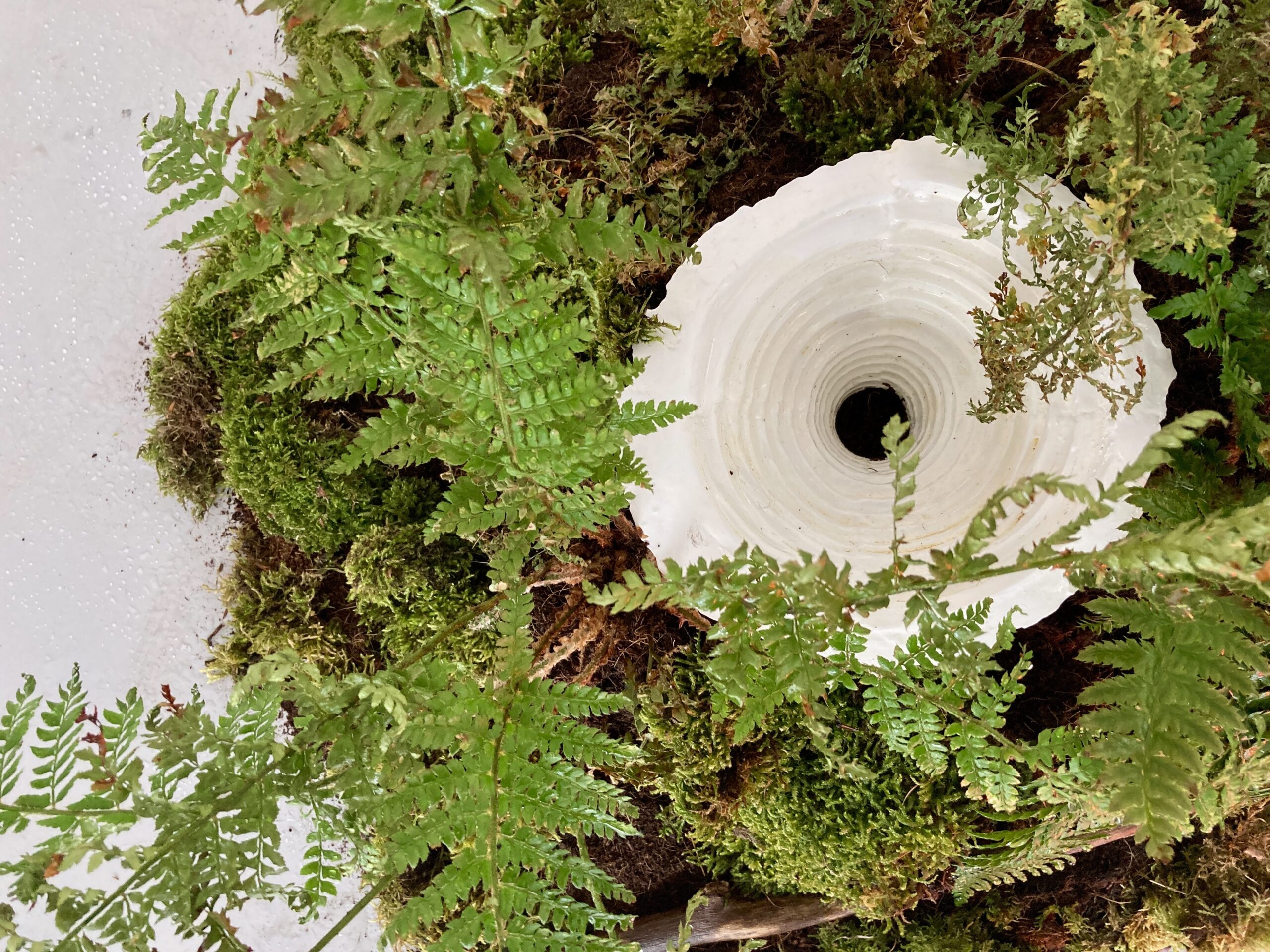
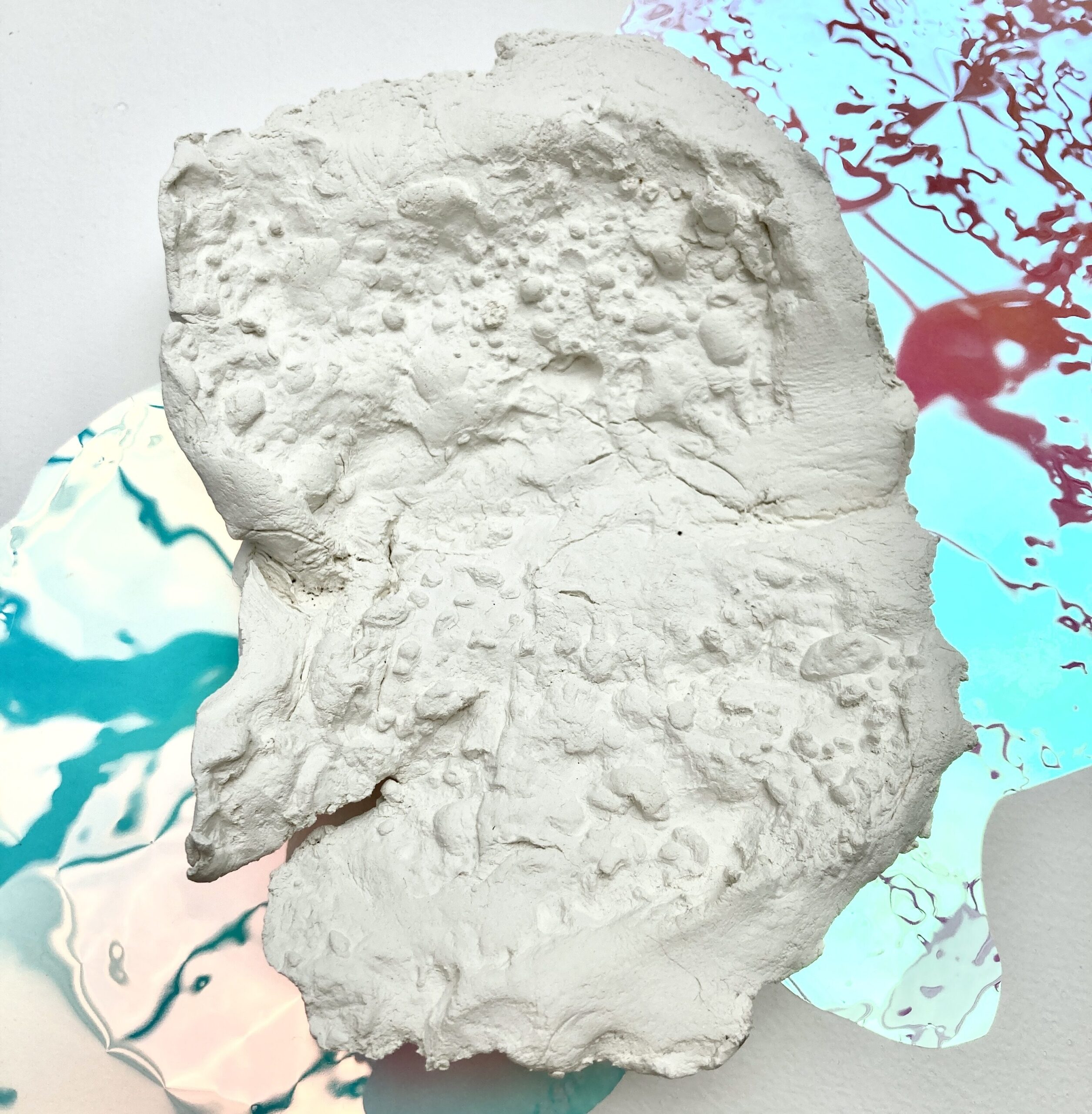
The Spanish term sobremesa translates in English as ‘upon (or about) the table’, and is a tradition of sitting around the dining table and enjoying conversation after a hearty meal. This body of work began when I printed the surface of my dining table; this felt like a gateway into bringing together the histories and materialities of two very different locations that are entangled in my life: West Yorkshire and Lanzarote. I became a mother in Lanzarote and feel embedded in its landscape, however, a series of unexpected events returned me back to my childhood home in rural West Yorkshire. Here, I live in an imaginary world of Lanzarote, exploring my relationship to both of these places from the position of motherhood and living in an epoch of time defined by climate crisis and the destruction of the natural world. I find the melancholy of this post-industrial landscape inescapable, and my work always seems to communicate a sense of loss, absence or dislocation, made manifest in the separation of the domestic from the wild and the isolation of late stage capitalism. Utopian ideas, simulations and fantasies fill these empty spaces. I feel the need to engage in a geological sensuality – perhaps a kind of romance or poetry – to recuperate and reconcile the different materialities and processes that contribute to a sense of place. There is an analogy to finding fossils or archeological artefacts buried in layers of strata akin to memories, sedimented and eroded through creative practice. I’m interested in the garden as a site of social and sculptural mediation between people, landscapes, ecology and systems of dwelling, nurture and preservation. I made this installation, Sobremesa, as a hybrid site for telling stories about encounters within my maternal stratum of the Anthropocene.
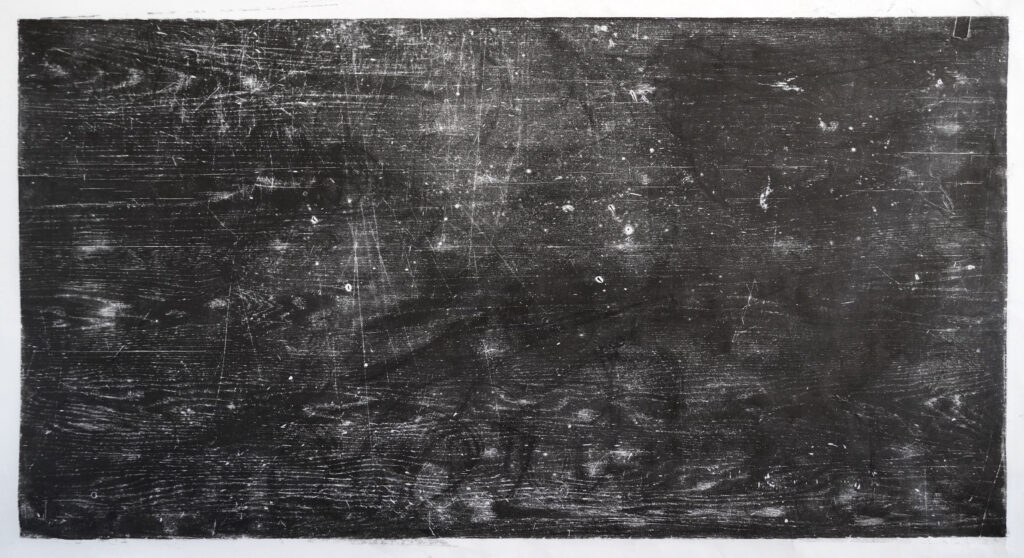
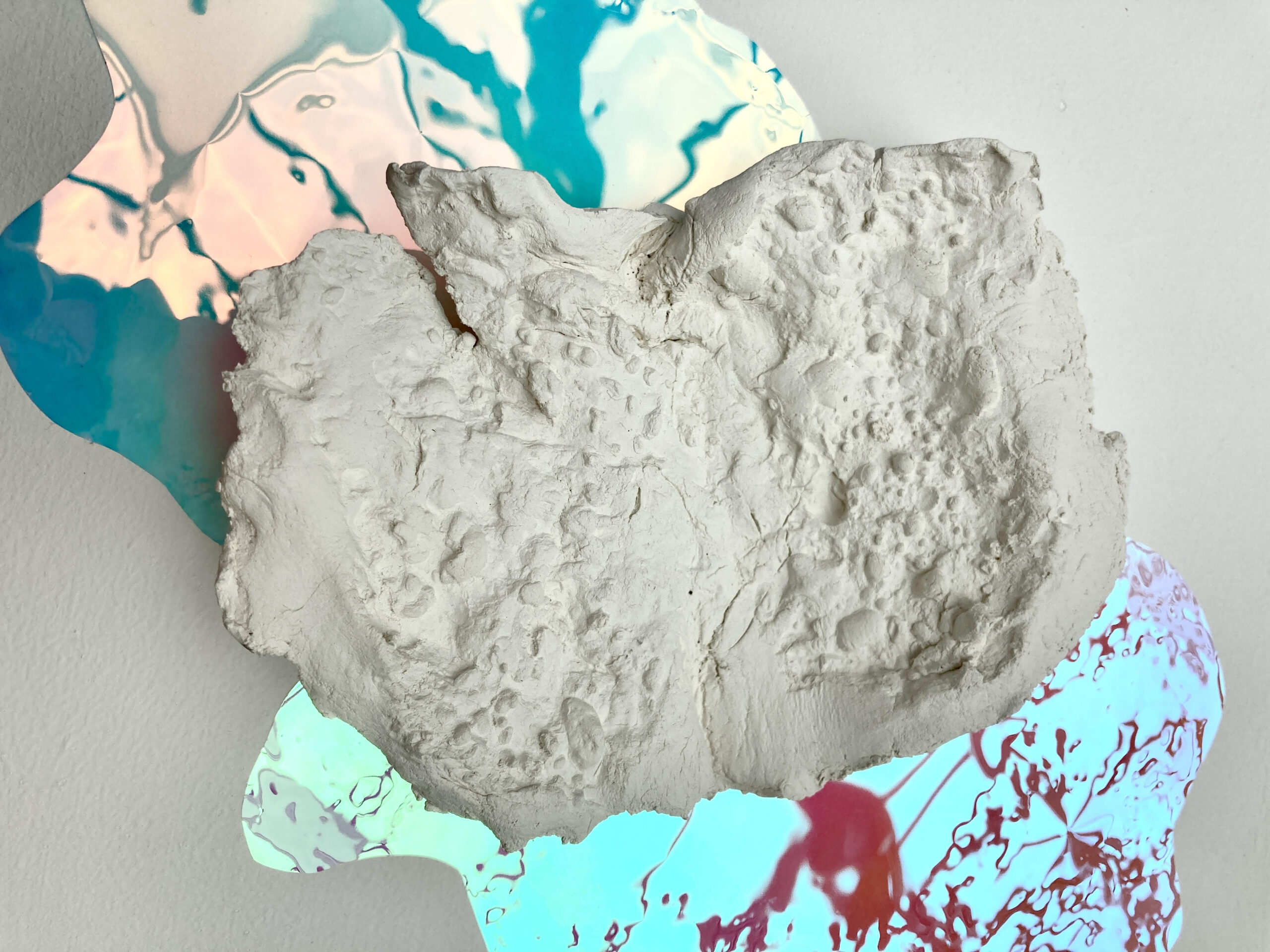
A relief print of my dining table, which has great significance for me since becoming a mother, as almost everything I do with my family and my creative practice happens there. Within this print, the trace of our different activities is exposed, like a document or family cosmology, and is also a window into an imaginary universe.
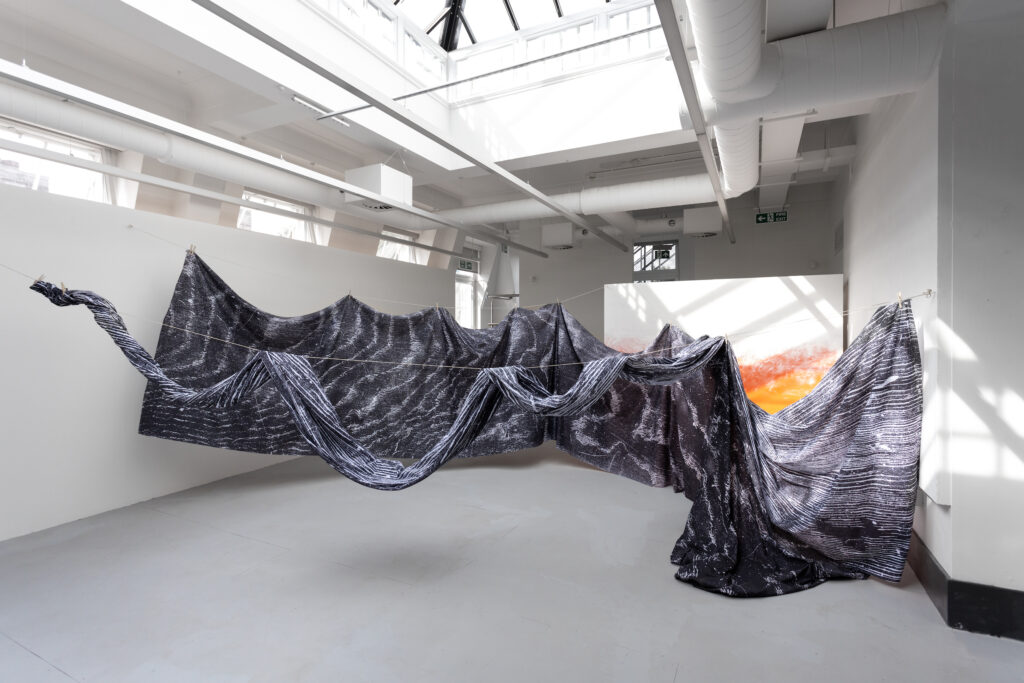
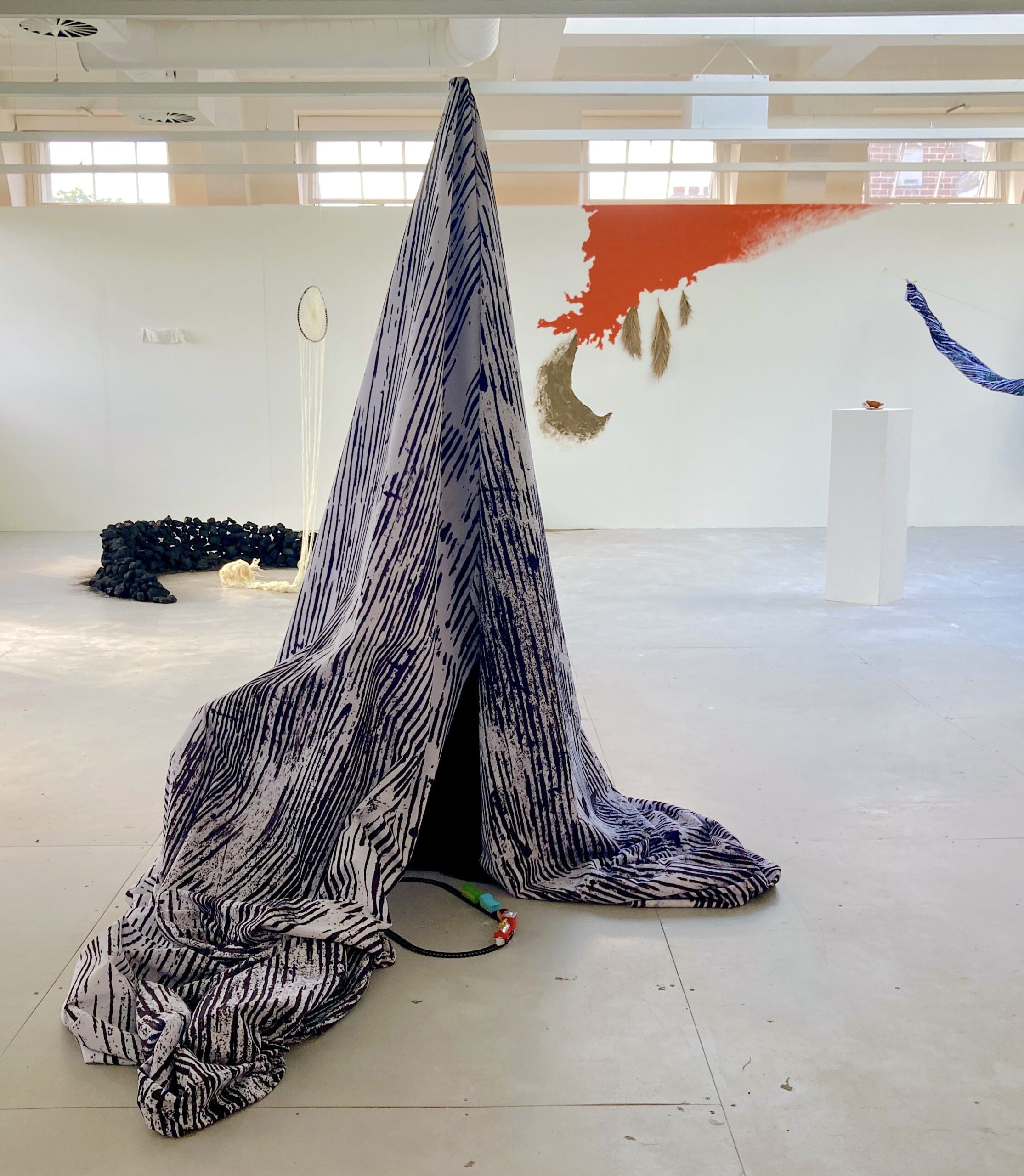
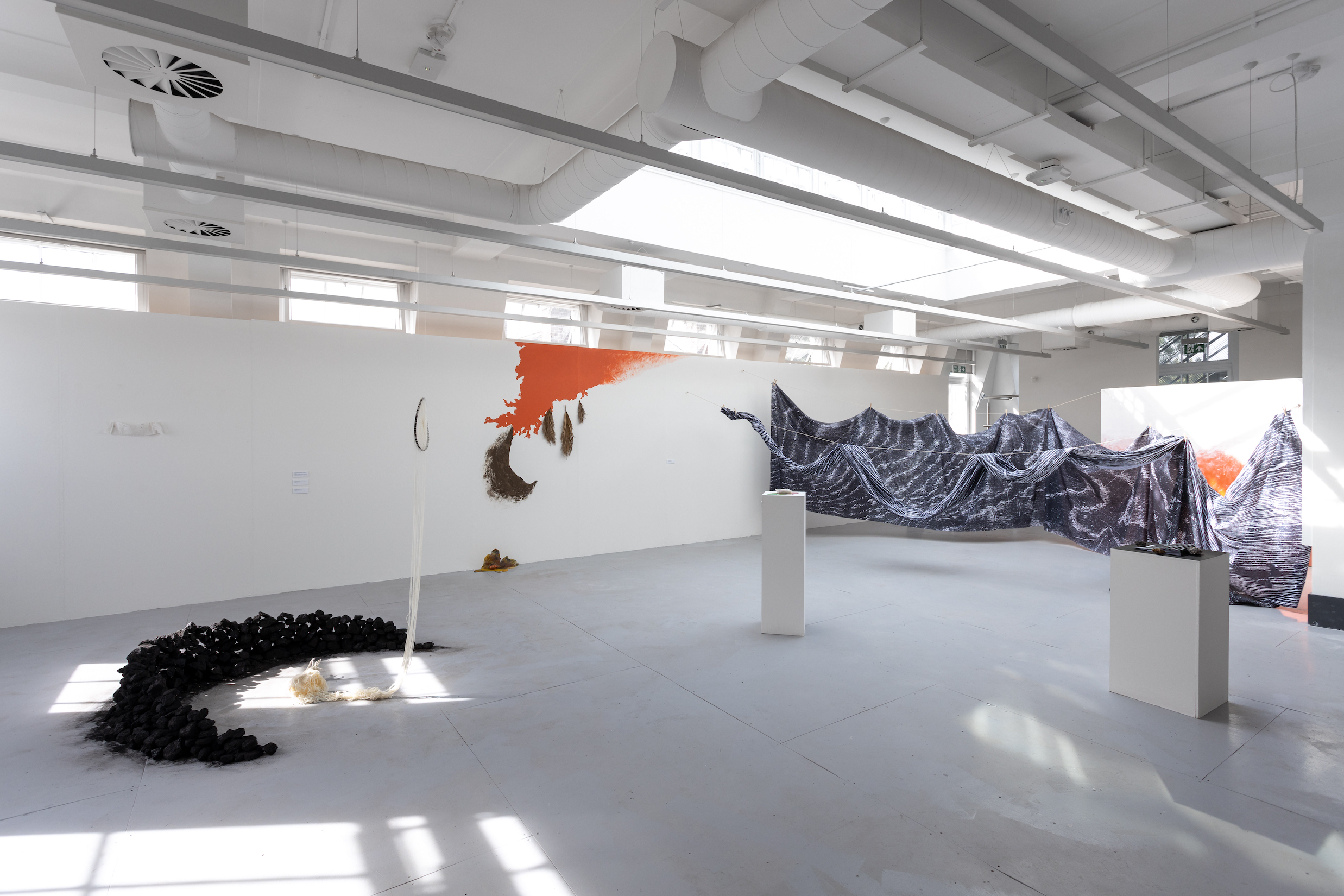
I had no idea what Tradewinds was about when I made it. Part dance, part mountainscape, part awkward domesticness. A piece of digitally printed fabric being blown around by fans in a room.
There was just this instinctual need to make something about hanging out the laundry. I actually enjoy washing my family’s clothes, there is a simplicity and – historically – it connects me to women all over the world. I had relief-printed the floorboards in my kitchen because they are full of intricate wave-like patterns from decades of tree growth and I wanted to blow them up big so they could engulf my body like clothes or water. Then I thought about the wind that dries our clothes, and the winds that have taken humans, animals and seeds around the globe for millennia. And most importantly for me, I thought about the North Atlantic tradewinds that took me from the UK to Lanzarote, where I became a mother and started my own family. Thinking beyond myself, there is also the inescapable fact that these same winds have played such a significant role in the development of our capitalist system, through colonisation and the Atlantic slave trade where the colonial trade pattern follows the clockwise air and water current system in the North Atlantic. The black and white prints were not made to intentionally reference this division of power, however, I’m glad that I feel this narrative could be read in what is a deeply personal piece of work about matriarchy and attempting to reach a connection through materials and processes.
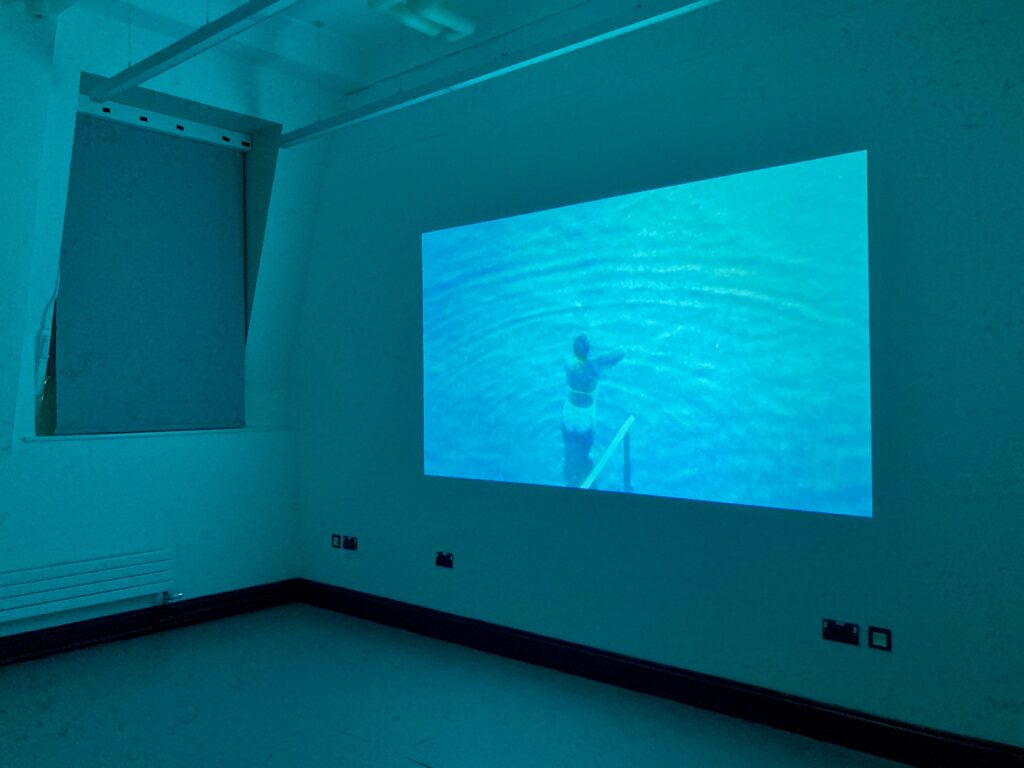
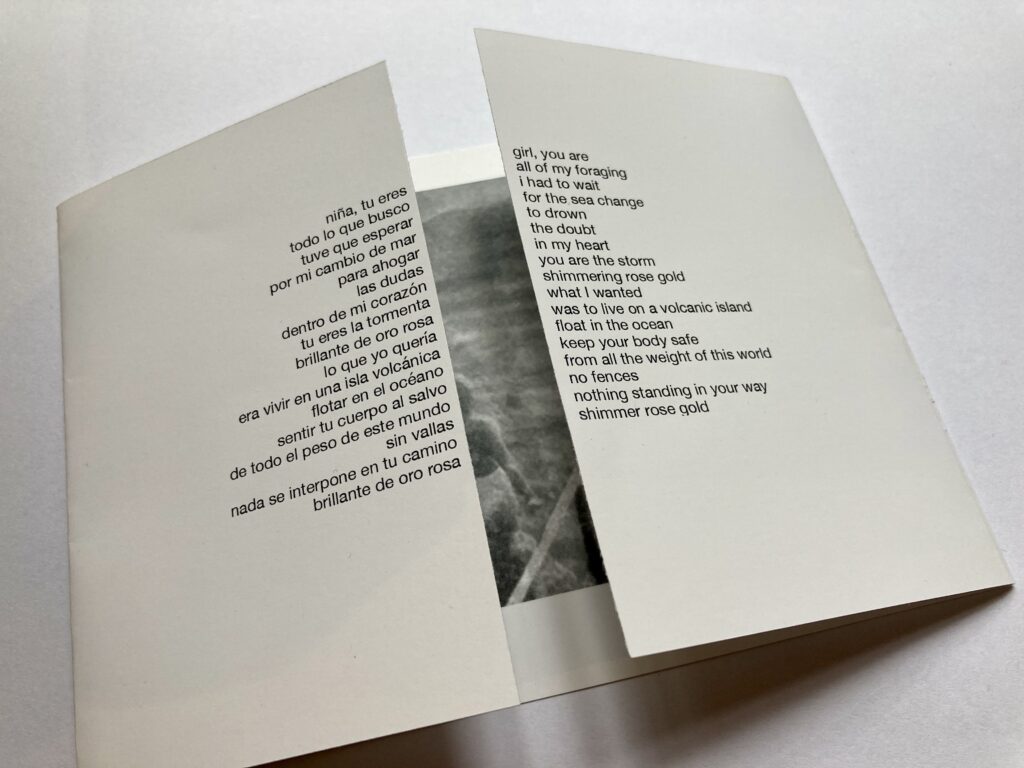
Part of the Sobremesa exhibition, the video Kitchen Memory Gyre (2022) is a collection of encounters on the island of Lanzarote, projected from the dining table in my kitchen onto maruishi paper, hanging from a creel where I dry my family’s clothes. The projection was filmed and then re-projected onto the paper repeatedly, so the light within the space of the kitchen eroded the image until it was no longer recognisable. The music – a utopian love song to my daughter – was performed in the same way, with the voice and synth projected and recorded to capture the ambience of the kitchen, until the sounds finally became too distorted to recognise the song. This took 12 rounds of projections and recordings. All these captures were then recomposed to create a new landscape/journey made out of the erosions and sedimentations of the kitchen environment and the process of performing and recording the memory embedded within it.
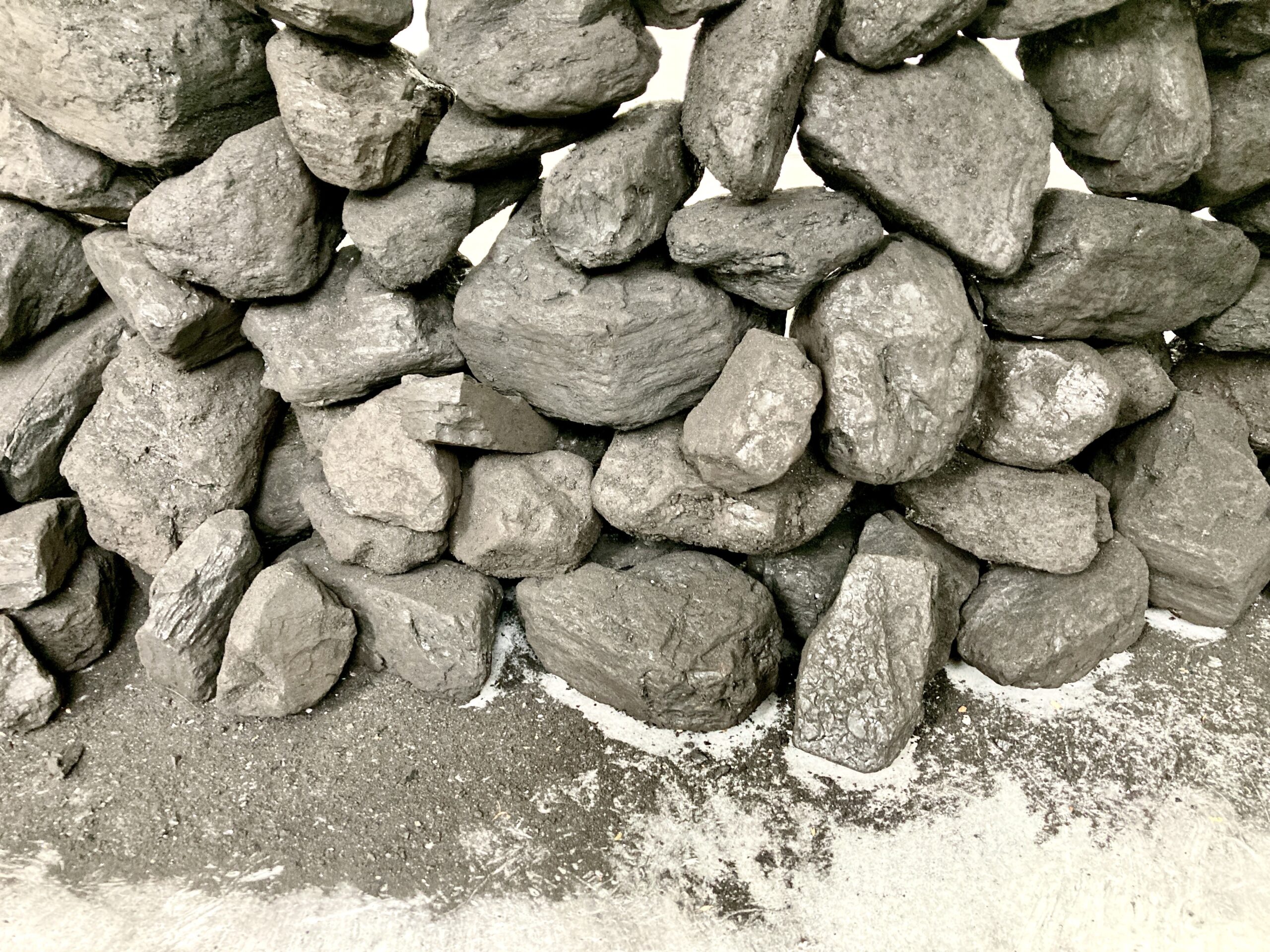
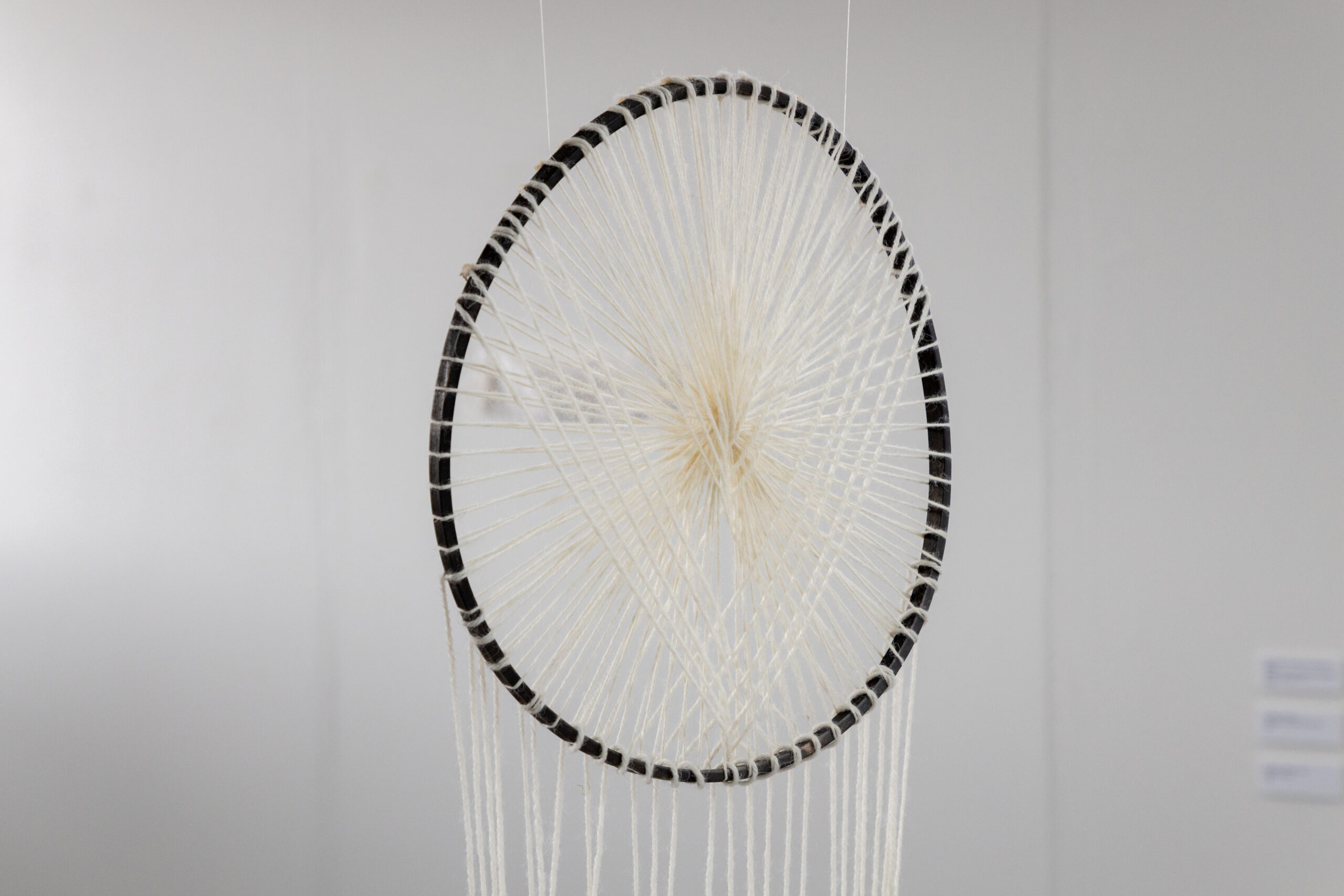
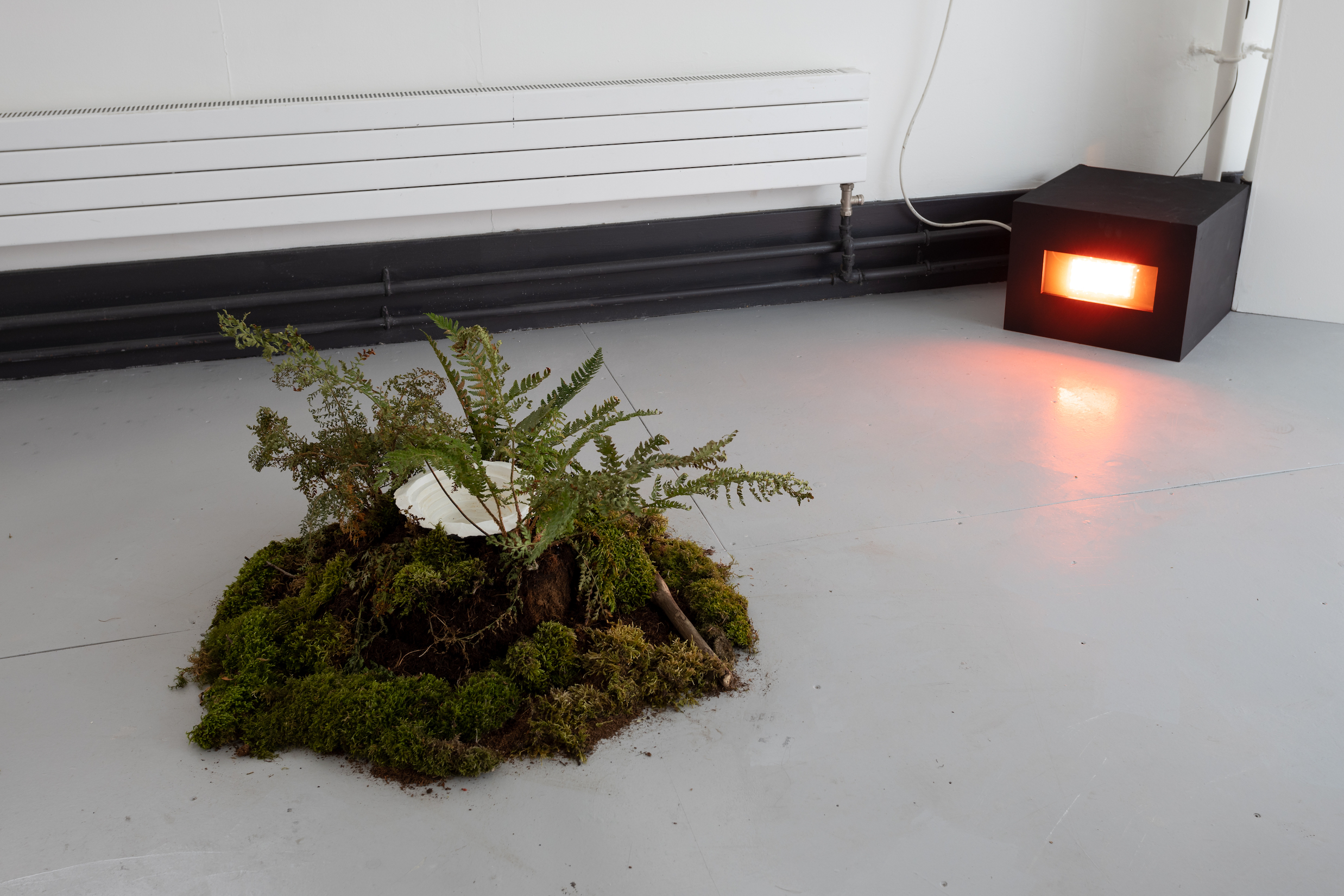
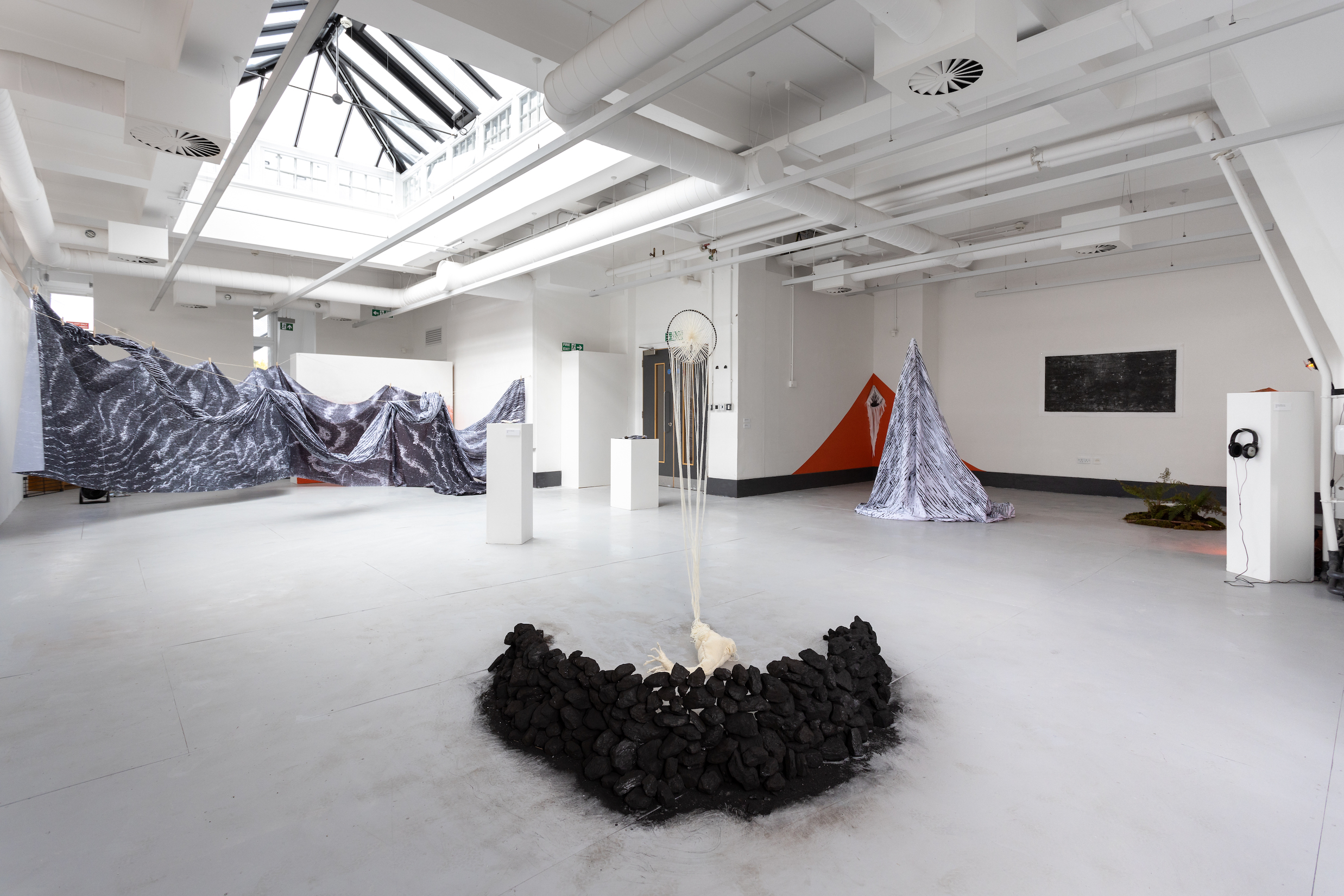
The following images document the Sobremesa exhibition, part of the MA show ‘Hidden’, held at The School of Fine Art, History of Art & Cultural Studies at The University of Leeds in September 2022.